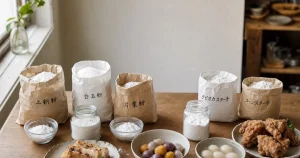
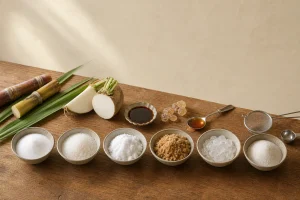
When Dragon Boat Festival gets close, the zongzi I miss most is not the savory meat one. It is the chilled Taiwanese alkaline zongzi: lightly amber, springy, almost translucent, and simple enough to eat with sugar or honey.
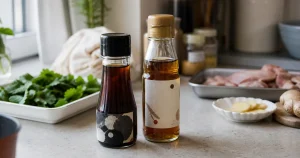
In Japan, glutinous rice and bamboo leaves are still possible to find. The harder ingredient is Taiwanese kansui or alkaline water, often called 鹼油 in Taiwanese recipes. For a home kitchen in Japan, I would think of the substitutes in two tracks. If you can buy clearly food-grade あくまき用あく汁, you can make a version with a more traditional ash-water aroma. If you want something realistic from a supermarket or drugstore, use 食品用重曹, food-grade baking soda, and make a small test batch first.
If you cannot find Taiwanese kansui, start with these two options
| Ingredient | Words you may see on Japanese packaging | What the zongzi tastes like | Best situation |
|---|---|---|---|
| Akujiru for akumaki | あく汁, 灰汁, あくまき用灰汁 | More amber, with wood ash, bamboo and mineral notes | When you can find food-grade akumaki ingredients and do not mind a Kagoshima-style flavor leaning |
| Food-grade baking soda | 食品用重曹, 食品用タンサン | Lighter color, softer chew and less sharp alkaline aroma | When you want to make a small batch with supermarket or drugstore ingredients |
Neither substitute is a perfect copy of Taiwanese commercial kansui. The point is to reproduce the cooking logic safely: an alkaline environment changes the rice color, helps the grains become springy, and keeps the texture from turning into ordinary sticky rice.
How is akujiru different from Taiwanese alkaline water?
Taiwanese alkaline zongzi recipes usually use a food-grade alkaline solution or alkaline powder diluted into water. The concentration is easier to follow when the product gives instructions. Akujiru, on the other hand, is ash water made by soaking and filtering plant ash, wood ash or bamboo ash. It is the traditional alkaline liquid used for Kagoshima akumaki.
The two ingredients are similar because both make glutinous rice yellowish, sticky and Q. The difference is flavor. Akujiru brings a little ash, bamboo and mineral character, so the result sits somewhere between Taiwanese alkaline zongzi and Kagoshima akumaki.
Akujiru version: for a more traditional ash-water flavor
Kagoshima akumaki is made by soaking glutinous rice in ash water, wrapping it in bamboo sheath and simmering it for a long time. Japanese official regional-food descriptions also explain that the alkaline liquid from burned wood or bamboo helps create the amber color and chewy texture.
If you find akujiru that is clearly sold for food use, it can be the closest practical route to an old-style alkaline zongzi in Japan. Start small, because the concentration and aroma can vary a lot by product.
Small-batch ratio
- 300 g round glutinous rice
- 150–250 ml edible akujiru for akumaki, adjusted according to the product
- Bamboo leaves or bamboo sheath, as needed
- A little neutral cooking oil, optional
Rinse the rice, soak it with akujiru for 3 hours to overnight, then drain and wrap. For the first test, I would start with 3 hours. If the aroma is too light, lengthen the soak next time. You can also add a small amount of akujiru to the cooking water to help the color develop.
The finished zongzi will taste more earthy than the baking-soda version. Chilled and eaten with sugar, honey or brown-sugar syrup, it feels closer to a festival snack than to a normal rice dish.
Recipe card: akujiru-style alkaline zongzi
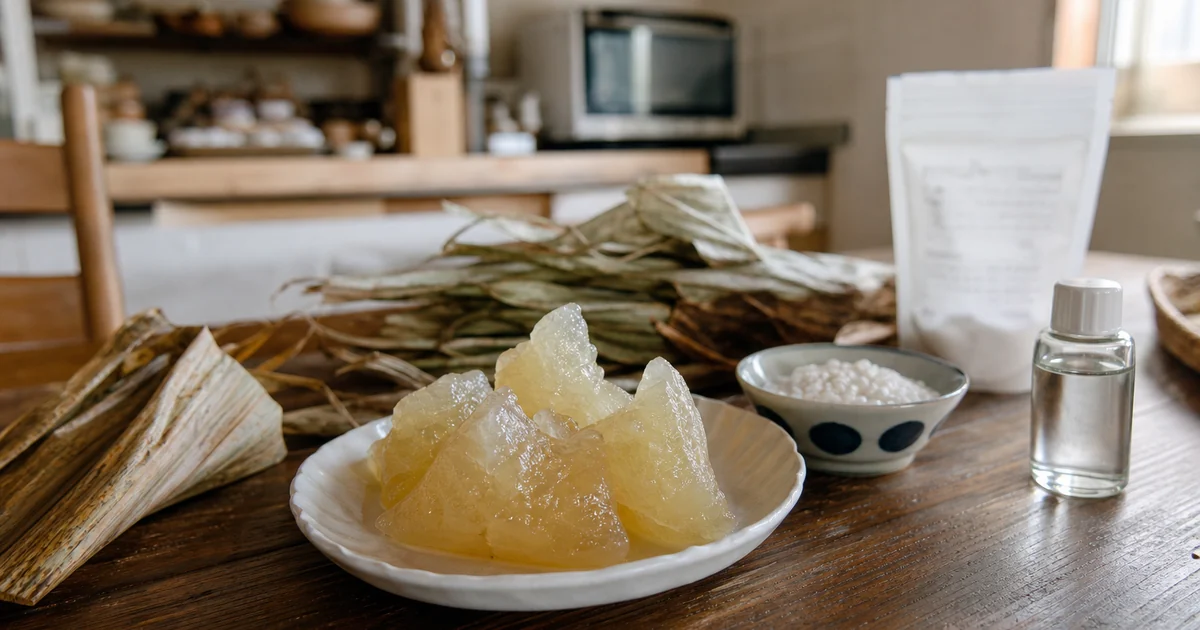
Ingredients
Method
- Rinse the glutinous rice and drain well.
- Soak the rice with akujiru for 3 hours to overnight. For the first batch, start with 3 hours and increase the time next time if the flavor is too mild.
- Soak and scrub the bamboo leaves or bamboo sheath. Keep the smooth side facing inward when wrapping.
- Drain the rice, wrap it in the leaves and fill each parcel only about two-thirds full so the rice has room to swell.
- Bring a pot of water to a boil, add the zongzi and keep them fully submerged. A little akujiru may be added to the cooking water to help the color develop.
- Simmer over medium-low heat until the grains turn sticky and amber. Cool completely, chill, then serve with sugar, honey or brown-sugar syrup.
Notes
- Akujiru concentration varies widely by product, so make the first batch small.
- Use only akujiru that is clearly sold for food use. Do not make food from unknown wood ash or unverified ash water.
- This version tastes more earthy and bamboo-like than the baking-soda version.
Baking soda version: the easiest Japan-supermarket method
If you cannot find akujiru or Taiwanese kansui, food-grade baking soda is the most realistic option. Look for packages marked 食品用, 食用, 料理用 or 食品添加物. Cleaning-grade baking soda is not for cooking.
Small-batch ratio
- 300 g round glutinous rice
- 3–5 g food-grade baking soda
- 100 ml water
- A little neutral cooking oil, optional
- Bamboo leaves, as needed
For the first batch, use 3 g baking soda. Boil it with 100 ml water for 3–5 minutes, cool it until it is no longer hot, then mix it into the drained rice and rest for 30 minutes to 1 hour. Wrap loosely and simmer for 1.5–2 hours.
This version is gentler: less amber, less sharp aroma, and a softer chew. If it tastes bitter or soapy, use less baking soda next time, mix more evenly, and make sure the zongzi are cooled and chilled before eating.
Recipe card: food-grade baking soda alkaline zongzi
Ingredients
Method
- Rinse the glutinous rice, soak it in water for 1–2 hours, then drain well.
- Combine the baking soda with 100 ml water, bring to a boil and keep it at a gentle boil for 3–5 minutes. Let it cool until it is no longer hot.
- Mix the baking-soda water into the rice in several additions, then rest for 30 minutes to 1 hour.
- Soak and scrub the bamboo leaves, keeping the smooth side facing inward when wrapping.
- Fill each wrapper about two-thirds full. Do not pack the rice too tightly.
- Place the zongzi in boiling water and simmer over medium-low heat for 1.5–2 hours.
- Cool completely and chill overnight. The texture is usually better the next day, served with sugar or honey.
Notes
- For the first batch, start with 3 g food-grade baking soda. If you want a stronger color and chew, adjust toward 5 g next time.
- A bitter or soapy taste usually means too much baking soda, uneven mixing or not enough chilling after cooking.
- Do not use cleaning-grade baking soda for food.
Leaves, wrapping and texture still matter
Alkaline liquid is only one part of the texture. The wrapper matters too. Bamboo leaves give a clean festival aroma; bamboo sheath can lean closer to akumaki. Whichever you use, soak it until pliable and scrub it clean.
- Do not pack the rice too tightly. Alkaline zongzi need space to swell and become bouncy.
- Keep the parcels fully submerged while simmering.
- Cool completely and chill before eating. The Q texture becomes clearer after refrigeration.
- Serve simply with sugar, honey, brown-sugar syrup or kinako if you like the Kagoshima direction.
Materials you should not use
Alkaline foods need more caution than ordinary rice dishes. Do not use unknown ash water, garden ash, incense ash, cleaning chemicals, borax, or any baking soda that is not marked for food use. If the label does not clearly say it is edible, leave it out of the kitchen.
For a first try in Japan, I would not chase a strong commercial alkaline-water flavor. A small, safe batch with food-grade materials is more useful. Once you know the texture and aroma you like, adjust the soaking time or baking-soda amount slowly.
FAQ
Yes, if it is clearly sold as edible akujiru for akumaki. It will not taste exactly the same as Taiwanese kansui, but it can give glutinous rice an amber color, chewy texture and ash-water aroma.
You can use food-grade baking soda labeled 食品用, 食用, 料理用 or 食品添加物. Start with 3 g for 300 g glutinous rice. Do not use cleaning-grade baking soda.
The most common reasons are too much baking soda, uneven mixing, or eating it before it has cooled and chilled. Reduce the baking soda next time and make a small test batch first.
No. Use only products clearly marked for food use. Cleaning baking soda, unknown ash water, borax and non-food alkaline materials should not be used for zongzi.
For me, the practical answer in Japan is simple: use akujiru only when the edible product is clear and trustworthy, and use food-grade baking soda when you need the easiest supermarket route. Keep the first batch small, chill it properly, and let the texture tell you how far to adjust the next one.