The first thing that usually breaks a Taiwanese recipe in Japan is not soy sauce or rice wine. It is the flour shelf.
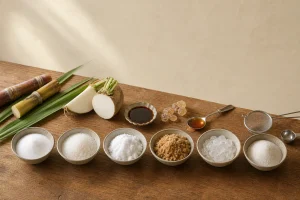
A Taiwanese recipe may say zai lai mi fen 在來米粉, sweet potato starch 地瓜粉, tapioca starch 太白粉, glutinous rice flour 糯米粉, or corn starch. Then you stand in a Japanese supermarket and see 上新粉, 白玉粉, 片栗粉, コーンスターチ, and sometimes タピオカスターチ. The names look close, but the texture can change a whole dish.
This guide is for Taiwanese home cooking in Japan. It is not a textbook chart. It is a practical shelf-to-kitchen guide: what to buy, what not to swap blindly, and how to adjust when you are making radish cake, steamed rice bowls, taro balls, fried chicken, or a simple thickened sauce.
Quick chart: what to buy in Japan
| Taiwanese ingredient | Best Japan-side substitute | Use it for | Be careful with |
|---|---|---|---|
| 在來米粉 / long-grain rice flour | Thai rice flour first; 上新粉 if that is all you can find | Radish cake, steamed rice bowls, rice batter dishes | Do not replace it with 白玉粉; the texture becomes sticky and mochi-like |
| 糯米粉 / glutinous rice flour | 白玉粉 or もち粉 | Tangyuan, mochi-like dough, chewy dumplings | It is not the same as regular rice flour |
| 地瓜粉 / sweet potato starch | タピオカスターチ; mixed with some 片栗粉 for fried foods | Salt-and-pepper fried chicken, fried pork chop, taro balls | Katakuriko alone gives a different, lighter crispness |
| 太白粉 / tapioca starch in Taiwan usage | 片栗粉 | Thickening sauces, soup, quick coating | Use less at first; it thickens quickly |
| 玉米澱粉 / corn starch | コーンスターチ | Cream soups, custards, light thickening | It gives a cleaner but less bouncy texture than tapioca starch |
Zai lai mi fen: the key flour for radish cake and steamed rice dishes
For Taiwanese radish cake, bowl rice cake, and rice-batter dishes, the most important powder is zai lai mi fen 在來米粉. It is a non-glutinous rice flour, so the texture should set softly and slice cleanly instead of stretching like mochi.
In regular Japanese supermarkets: start with 上新粉
上新粉 is made from non-glutinous rice and is the easiest supermarket option. It can work for home-style radish cake, especially if you are not aiming for the exact old-shop texture. The batter may feel a little smoother and less grainy than the Taiwanese version, so I usually keep the water modest and let the batter thicken before steaming.
Thai rice flour is often closer than 上新粉
If you have access to an Asian grocery store, Thai Rice Flour is often closer to Taiwanese rice flour than Japanese 上新粉. It is a good first choice for radish cake, bowl rice cake, rice noodles, or anything where you want a rice flavor without a sticky mochi pull.
The main rule is simple: for 在來米粉, choose non-glutinous rice flour. Do not reach for 白玉粉 just because both are “rice” powders.
Glutinous rice flour: look for shiratamako or mochiko
When a Taiwanese recipe calls for 糯米粉, you want a sticky rice powder. In Japan, the common choices are 白玉粉 and もち粉.
白玉粉 is easy to find near baking or traditional sweets ingredients. The grains are usually coarse and need to be rubbed or hydrated well before the dough becomes smooth. It works well for tangyuan, mochi-like dumplings, and chewy desserts.
もち粉 is finer when you can find it, and it behaves closer to a flour. Either way, use these for chewy desserts, not for radish cake or bowl rice cake.
Sweet potato starch: use tapioca starch when you cannot find it
Taiwanese 地瓜粉 or 番薯粉 is what gives many fried foods that rough, craggy, Taiwanese-night-market crust. It is also part of the chew in taro balls and sweet potato balls.
Japanese supermarkets do not always carry true sweet potato starch. If you cannot find it, タピオカスターチ is usually the closest easy substitute because it gives chew and a stronger bouncy texture.
For fried foods
For Taiwanese fried chicken or fried pork chop, tapioca starch gives a better bite than cornstarch. If you only have 片栗粉, it still fries, but the coating becomes lighter, smoother, and less like Taiwanese 鹽酥雞. A practical mix is mostly タピオカスターチ with a little 片栗粉, then let the coated meat rest briefly so the surface hydrates before frying.
For taro balls and sweet potato balls
For 芋圓 or 地瓜圓, do not use only 片栗粉 if you want that Taiwanese chew. Use タピオカスターチ as the base. Add hot mashed taro or sweet potato while warm, then adjust with small amounts of starch until the dough is soft but not wet.
Taiwanese taibai powder: Japanese katakuriko is the easiest substitute
In Taiwan, 太白粉 is commonly used for thickening soups and sauces, coating meat, and making a glossy finish. In daily Japanese supermarket cooking, 片栗粉 is the most practical replacement.
Use it for stir-fry sauces, soup thickening, and quick velveting. Mix it with cold water first, pour it in slowly, and stop before the sauce becomes too heavy. Japanese katakuriko can thicken very quickly, especially in a small pan.
For fried food coating, 片栗粉 is useful, but it does not fully replace the rough Taiwanese sweet-potato-starch crust. Think of it as the convenient thickener and light coating powder, not as the answer to every Taiwanese flour question.
Corn starch: look for コーンスターチ
For 玉米澱粉, look directly for コーンスターチ. It is useful in creamy soups, custards, light sauces, and baking.
Compared with tapioca starch or katakuriko, cornstarch gives a cleaner and slightly shorter texture. It is good when you want a gentle thickening without much bounce. For Taiwanese fried chicken or taro balls, it is usually not my first choice.
How to choose by dish
Radish cake
Use Thai rice flour if you can find it. If not, use 上新粉 and keep the batter slightly thicker. Do not use 白玉粉; it will turn the cake sticky and elastic.
Bowl rice cake
Use non-glutinous rice flour. A mix of Thai rice flour and a little starch can help the bowl set smoothly, but the base should still be rice flour, not glutinous rice flour.
Rice noodles or thick rice noodles
Start with rice flour and adjust with starch only for texture. If the batter is mostly starch, the result becomes too chewy and loses the rice flavor.
Tangyuan and mochi-style desserts
Use 白玉粉 or もち粉. Hydrate the dough patiently. If it cracks, add water a few drops at a time instead of dumping in more liquid.
Salt-and-pepper fried chicken or fried pork chop
Use sweet potato starch if you have it. If not, use タピオカスターチ, or a tapioca-starch-heavy mix with 片栗粉. Let the coating sit until the surface looks slightly damp before frying; that small wait helps create the rough crust.
Labels that are easy to misread
Rice Flour is not Glutinous Rice Flour
English labels can be tricky. Rice Flour usually means non-glutinous rice flour. Glutinous Rice Flour means sticky rice flour. They are not interchangeable in radish cake, tangyuan, or mochi-style dough.
Rice Starch is not exactly Rice Flour
Rice starch is mostly starch, while rice flour includes more of the whole rice grain. In steamed rice dishes, rice starch alone can make the texture too tight or too jelly-like.
Katakuriko is not a universal Taiwanese powder
片栗粉 is useful and easy to buy, but it is not the same as 在來米粉, 糯米粉, or 地瓜粉. It can rescue a sauce; it cannot replace the rice body of radish cake or the mochi chew of glutinous rice flour.
How to rescue common failures
| Problem | Likely cause | What to do next time |
|---|---|---|
| Radish cake is too sticky | Used glutinous rice flour or too much starch | Use non-glutinous rice flour; reduce starch; thicken batter before steaming |
| Radish cake falls apart | Too much water or not enough cooking before steaming | Cook the batter until it thickens before pouring into the mold |
| Taro balls are hard | Too much starch or dough dried out | Add starch gradually while the taro is warm; keep the dough covered |
| Fried coating is smooth, not craggy | Used only katakuriko or did not rest the coating | Use sweet potato/tapioca starch and rest the coated food briefly |
| Sauce becomes gluey | Too much katakuriko slurry | Add slurry slowly and stop early; heat will continue thickening it |
Six lines to remember
- For 在來米粉, choose Thai Rice Flour first, then 上新粉 if needed.
- 在來米粉 is not 白玉粉.
- 糯米粉 is closer to 白玉粉 or もち粉.
- 地瓜粉 is closest to tapioca starch when you are in Japan.
- 太白粉 is usually easiest to replace with 片栗粉 for sauces.
- 玉米澱粉 is コーンスターチ.
If you remember only one thing, remember the role of the powder: rice body, sticky chew, crispy crust, or sauce thickening. Once the role is clear, the Japanese supermarket shelf becomes much less confusing.
Use Thai Rice Flour first if you can buy it at an Asian grocery store. If you only have a regular Japanese supermarket, 上新粉 is the practical fallback for radish cake and steamed rice dishes. Do not replace it with 白玉粉, because that is a sticky rice flour.
There is no perfect one-word supermarket equivalent. Look for non-glutinous rice flour: Thai Rice Flour at Asian stores, or 上新粉 in Japanese supermarkets. Avoid labels that say glutinous rice flour, 白玉粉, or もち粉 for radish cake.
For chew and Taiwanese-style fried coating, タピオカスターチ is usually the closest easy substitute. For a lighter coating or sauce thickening, 片栗粉 can help, but it does not give exactly the same rough crust as sweet potato starch.
For everyday home cooking, Japanese 片栗粉 is the easiest substitute for Taiwanese 太白粉 when thickening soups and sauces. It thickens quickly, so mix it with cold water and add it slowly.
No. 白玉粉 is a sticky rice flour, so it is for tangyuan, mochi-like dough, and chewy sweets. If you use it for radish cake or bowl rice cake, the texture becomes sticky and elastic instead of softly set.
Yes. Thai Rice Flour is often a good choice for Taiwanese radish cake in Japan because it is a non-glutinous rice flour. Adjust water gradually and cook the batter until it thickens before steaming.
Use タピオカスターチ if you can find it. If you only have 片栗粉, the fried coating will still work but will be lighter and smoother. For a more Taiwanese texture, use mostly tapioca starch and let the coated chicken rest briefly before frying.
Once you stop translating only by name and start translating by cooking function, the powder shelf in Japan becomes much easier to use. Rice flour builds the body, glutinous rice flour gives chew, tapioca or sweet potato starch gives bounce and crust, and katakuriko is the everyday thickener.