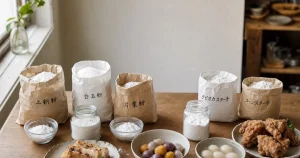
If you stand in a Japanese supermarket and wonder whether 上白糖, グラニュー糖, 三温糖, or きび砂糖 can replace the sugar you used in Taiwan, start from the cooking result instead of the name on the bag. The sweetness is only one part. Crystal size, moisture, color, and caramel aroma decide whether a cake stays soft, a sauce turns glossy, or braised pork tastes like home.
In short: for everyday Taiwanese cooking in Japan, 上白糖 is the easiest one-bag choice. For baking, keep グラニュー糖 or fine granulated sugar. For Taiwanese braised dishes and sweet soups that need a brown-sugar-like cane depth, reach for 三温糖 or きび砂糖 when 二砂糖 is not available.
Quick answer: which sugar should you buy first?
- One all-purpose bag in Japan: buy 上白糖 if you mostly cook home dishes, sauces, simmered foods, and Taiwanese-style everyday meals.
- Baking often: buy グラニュー糖 or fine granulated sugar. It dissolves predictably and keeps cake, cookie, custard, and meringue formulas cleaner.
- Taiwanese braised pork, red-braised dishes, and sweet soups: use 三温糖 or きび砂糖 when you miss the color and cane aroma of 二砂糖.
- Recipe only says “sugar”: use granulated sugar for baking; use 上白糖 or fine sugar for home cooking; choose a brown-toned sugar only when the dish benefits from color and depth.
The safest way to think is this: white sugar and 砂糖 are broad words. The actual product—上白糖, グラニュー糖, 特砂糖, 細砂糖, 二砂糖, 三温糖—changes how fast it dissolves, how moist the finished food feels, and whether the flavor stays clean or turns more caramel-like.
White sugar, granulated sugar, and 上白糖 are not the same layer
Much of the confusion comes from mixing general names with product names. In Chinese recipes, 白糖 often simply means refined white sugar. In Japanese recipes, 砂糖 may casually mean 上白糖 in home cooking, but it can also point toward グラニュー糖 in Western-style baking.
上白糖 is especially important in Japan. It is not just “very white sugar.” A small amount of invert sugar syrup is added to the surface of the sugar crystals, so it feels slightly moist, clumps more easily, browns readily, and keeps cakes or simmered dishes a little softer.
Taiwanese 特砂糖 and 細砂糖 are both refined white sugars, but the crystal size differs. 特砂糖 is larger and keeps well for daily cooking. 細砂糖 is finer and dissolves more quickly, which makes it more stable for sponge cake, chiffon cake, cookies, custards, and drinks. 二砂糖 carries more color and cane/caramel aroma, so it changes the flavor on purpose.
Six sugar types compared
| Sugar type | What it is | Texture and moisture | Flavor direction | Best uses | Substitution note |
|---|---|---|---|---|---|
| 上白糖 | Common Japanese refined sugar with a little invert sugar syrup on the crystal surface | White, fine, slightly moist, clumps easily | Soft sweetness, good moisture and browning | Japanese simmered dishes, teriyaki, home cooking, pound cake, bread | Fine granulated sugar can replace it 1:1, but the result may be drier and paler |
| White sugar / 白糖 | A broad term for refined white sugar | Depends on the product | Clean neutral sweetness | General cooking, drinks, desserts, baking | Clarify whether the recipe needs fine or coarse crystals |
| 砂糖 | A general word, not one exact product | Depends on the product | Depends on the product | Japanese and Chinese recipes both use this vague word | For baking choose fine/granulated; for cooking choose 上白糖 or fine sugar |
| 特砂糖 / 特砂 | Taiwanese coarse refined white sugar | White, larger crystals, stores well | Clean sweetness, almost no cane aroma | Everyday cooking, sweet soups, pickling, pantry sugar | Not ideal for delicate cakes or buttercream because it dissolves slowly |
| 細砂糖 / 細砂 | Taiwanese fine refined white sugar | White, fine crystals, dissolves quickly | Neutral sweetness | Chiffon cake, sponge cake, cookies, bread, custard, caramel, drinks | Seal tightly after opening because fine crystals take moisture easily |
| 二砂糖 / No. 2 sugar | Taiwanese sugar with more color and molasses-like aroma | Pale golden to amber crystals | Cane aroma, mild caramel depth | Braised pork, red-braised dishes, sweet-and-sour sauces, red bean soup, grass jelly | Changes color and flavor; avoid it in snow-white or clean-tasting desserts |
Japan and Taiwan supermarket substitute table
| If the recipe says | Buy in Japan | Buy in Taiwan | Ratio | What changes |
|---|---|---|---|---|
| 上白糖 | 上白糖 | 細砂糖 | 1:1 | Fine sugar gives a slightly drier and paler result; watch cakes so they do not overbake |
| グラニュー糖 | グラニュー糖 | 細砂糖 | 1:1 | Taiwan fine sugar may be slightly finer and dissolves faster, usually not a problem |
| White sugar / 白糖 | 上白糖 or グラニュー糖 | 細砂糖 or 特砂糖 | 1:1 | Use fine sugar for desserts; fine or coarse refined sugar for cooking |
| 砂糖 | 上白糖 for Japanese home dishes; グラニュー糖 for Western-style sweets | 細砂糖 | 1:1 | Read the recipe type before deciding |
| 二砂糖 | 三温糖, きび砂糖, or a coarse brown-toned sugar | 二砂糖 | Start 1:1 | 三温糖 is practical but not identical; adjust color with soy sauce, caramelization, or a little rock sugar when appropriate |
| 特砂糖 | グラニュー糖 or 白ざら糖 depending on use | 特砂糖 | 1:1 | Do not replace fine sugar in delicate baking with a large-crystal sugar |
For Taiwanese flavor in Japan, the hardest gap is often 二砂糖. 三温糖 and きび砂糖 can help, but they do not perfectly reproduce the cane aroma and crystal feel of Taiwanese 二砂糖. For lu rou fan, red-braised pork, soy-braised eggs, or sweet soups, I would start with 三温糖 1:1, then build color with soy sauce, slow caramelization, or a small piece of rock sugar if the recipe already welcomes that shine.
How to choose sugar for cooking and baking
For cooking: think aroma, color, and gloss
- Braised pork and red-braised dishes: 二砂糖 is the most Taiwanese-feeling choice. In Japan, 三温糖 or きび砂糖 gives a practical warm color and caramel note.
- Teriyaki and Japanese simmered dishes: 上白糖 works smoothly because it dissolves well and browns gently.
- Cold sauces and quick dressings: fine granulated sugar dissolves faster than coarse sugar.
- Clear sweet soups: fine sugar or rock sugar keeps the flavor cleaner; use brown-toned sugar only when you want cane aroma.
For baking: think crystal size and moisture
- Chiffon and sponge cake: fine granulated sugar is the most stable because it dissolves into egg foam more easily.
- Pound cake, madeleines, honey cake: 上白糖 can make the crumb feel more moist and the color a little deeper.
- Cookies and tart dough: fine sugar is reliable; brown-toned sugar adds aroma but changes color and spread.
- Buttercream, macarons, icing: follow the recipe and use powdered sugar or the specified sugar. Do not swap in coarse sugar casually.
Storage notes and common misunderstandings
- White sugar is not “bleached sugar” by default: refined sugar crystals are nearly colorless; the crystals look white because they reflect light.
- 二砂糖 is not a health food: it has more aroma and color, but the mineral amount is still small. Use it for flavor, not nutrition.
- 上白糖 clumps more easily: the moist surface helps texture in cooking, but it also reacts to humidity. Keep it sealed after opening.
- 特砂糖 stores well: the larger crystals handle humidity better, which is why it works as a pantry cooking sugar.
FAQ
Not exactly. 上白糖 is slightly moist because a small amount of invert sugar syrup is added to the crystal surface. Taiwanese white sugar usually means a drier refined white sugar such as fine granulated sugar. For home cooking they can often be swapped 1:1, but baking texture and browning may change a little.
砂糖 is a general word for sugar. In Japanese home recipes it often means 上白糖; in Western-style baking it may mean グラニュー糖. Read the dish type first: simmered dishes usually tolerate 上白糖, while cakes and meringues are safer with granulated sugar.
Use 三温糖 or きび砂糖 when you want a little color and caramel-like depth. They are not identical to Taiwanese 二砂糖, but they are the most practical Japan supermarket direction for braised pork, red-braised dishes, and Taiwanese sweet soups.
Yes, most recipes can use a 1:1 replacement. The result may be slightly drier and a little paler because fine granulated sugar is less moist. In simmered sauces, reduce a little longer or add a touch of mirin or honey only when it fits the dish.
The main difference is crystal size. 特砂糖 has larger crystals and keeps well for everyday cooking; 細砂糖 dissolves faster and is more reliable for cakes, cookies, custards, drinks, and whipped egg foam.
If you cook mostly home dishes and sauces, buy 上白糖 first because it is easy to find and works in most Japanese kitchens. If you bake often, add グラニュー糖. If you miss Taiwanese braised flavors, keep 三温糖 or きび砂糖 as a second bag.
No. 三温糖 has brown color and a caramel-like note, but it is not the same product as Taiwanese 二砂糖. It works as a practical substitute for color and depth, especially in braised dishes, but test carefully in precise desserts.
Calm practical ending
You do not need to memorize every sugar name before cooking Taiwanese food in Japan. Keep the roles clear: 上白糖 for flexible home cooking, グラニュー糖 or fine sugar for baking, and 三温糖 or きび砂糖 when a Taiwanese dish needs the warmer color and depth of 二砂糖. Once you choose by texture and cooking purpose, the supermarket shelf becomes much less confusing.
Notes and practical reference
- Japanese sugar industry references on 上白糖, グラニュー糖, 白ざら糖, 三温糖, sugar composition, and typical use cases.
- Taiwanese home-cooking use of 特砂糖, 細砂糖, and 二砂糖 in braised dishes, sweets, drinks, and baking.
- ShinraCooking kitchen notes from cooking Taiwanese home dishes with Japanese supermarket sugars in small Japanese kitchens.