When duck eggs are hard to find, chicken eggs can still become useful salted eggs. The process is almost the same: salt slowly moves through the shell and membrane, changing the texture and flavor of the white and yolk.
The result is not identical to salted duck eggs. Chicken egg yolks are smaller and usually less oily, so they will not give the same rich “flowing oil” feeling. But if you need salted yolk for zongzi, pastries, or a salted-egg stir-fry, this is a practical Japan-kitchen substitute.
Quick answer: use a water-to-salt ratio of about 3–4:1, cure for 21–30 days, and test one fully cooked egg from day 21. Once the flavor is right, refrigerate the eggs and always steam or boil them thoroughly before eating.
Can you make salted eggs with chicken eggs?
Yes. Salted eggs are made by curing whole eggs in salt, and the method works with chicken eggs as well as duck eggs. The main difference is the final yolk quality, not whether the method works.
Chicken eggs have smaller yolks and less fat, so the yolk usually becomes firm and savory rather than deeply oily. Think of them as a substitute ingredient, not a perfect copy of salted duck eggs.
Brine ratio for salted chicken eggs
For a small home batch, start with a stable brine: water : salt = 3–4 : 1 by weight.
| Batch | Water | Salt | Eggs | Notes |
|---|---|---|---|---|
| Small test | 600 g | 150–200 g | 5–8 eggs | Best for a first try |
| Medium batch | 1200 g | 300–400 g | about 15–25 eggs | Adjust to your jar size |
| Strong large batch | 1800 g | 600 g | about 40–50 eggs | Stable but should be tested early for saltiness |
If you are worried about spoilage, choose the stronger side. If you are worried the egg white will become too salty, use the milder side and test from day 21.
Recipe card: salted chicken eggs in brine
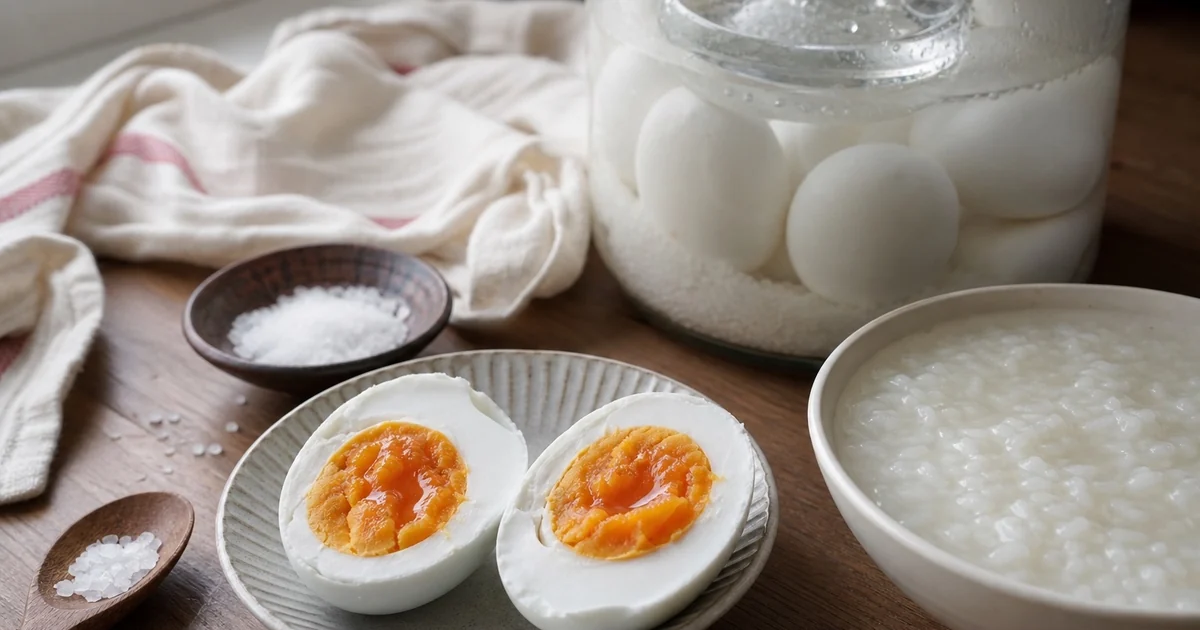
Ingredients
Method
- Choose fresh chicken eggs with complete, uncracked shells. Wash the shells gently and let them dry completely.
- Wash a glass jar or sealable container, rinse with hot water, and let it dry. Avoid leaving raw water inside the jar.
- Bring the water to a boil, add the salt, and stir until fully dissolved. Let the brine cool completely before using it.
- Place the eggs in the container and pour in the cooled brine. The eggs must stay fully submerged. If they float, weigh them down with a clean small plate or a sealed water bag.
- Seal the container and keep it in a cool, shaded place away from direct sunlight for 21–30 days.
- On day 21, take one egg out and steam or boil it fully before tasting. If the white and yolk are not salty enough, continue curing for another 3–7 days.
- When the flavor is right, remove the eggs, wipe them dry, and refrigerate. Always steam or boil salted eggs thoroughly before eating.
Notes
- Do not use cracked eggs. If the brine smells strange, grows mold, turns unusually sticky, or an egg cracks during curing, discard it.
- A water-to-salt ratio between 3:1 and 4:1 works for home use. A stronger brine is more stable; a milder brine should be tested earlier.
- Chicken egg yolks are smaller and usually less oily than duck egg yolks, but they are useful for zongzi, pineapple cakes, mooncakes, and salted-egg stir-fries.
- After curing, refrigerate the raw salted eggs. Once steamed or boiled, keep them sealed in the refrigerator and use within about one week.
Step-by-step method
Use eggs with clean, intact shells. Wash them gently and dry them completely. The jar should also be clean and dry; hot water rinsing is enough for a home batch, but do not leave raw water inside.
Boil the water, dissolve the salt, then let the brine cool completely. Put the eggs in the jar, pour in the brine, and keep every egg submerged. A clean small plate or sealed water bag can hold floating eggs down.
Seal the jar and keep it in a cool shaded place for 21–30 days. Do not place it in direct sun. From day 21, cook one egg fully and taste it. If it is not salty enough, continue curing for a few more days.
Chicken eggs vs duck eggs
Salted duck eggs are still the better choice when you want a large, rich, oily yolk. That matters for classic salted egg yolks, mooncakes, and recipes where the yolk is the main texture.
Salted chicken eggs are more practical. They are easier to buy in Japan, cheaper, and good enough when the yolk will be chopped, mashed, baked, or mixed into a filling. For Taiwanese zongzi or homemade pastries, they can solve the “no duck eggs nearby” problem.
How to know when salted eggs are ready
A ready salted chicken egg should have a clearly salty white and a firm, savory yolk. The yolk may turn deeper yellow-orange, but it usually will not be as oily as a salted duck egg.
Always test by cooking one egg first. Do not taste raw cured egg. If the white is already too salty but the yolk is still weak, remove the eggs from the brine and use them in dishes where the white can season the whole pan.
How to steam or boil them
After curing, treat the eggs as raw until cooked. Steam or boil whole salted eggs until fully set. If you only need the yolks for filling, cook the eggs first, then separate the yolks and whites.
The cooked whites are usually very salty. Chop and use them in congee, fried rice, stir-fried vegetables, or a small amount in salted-egg dishes instead of adding all at once.
Storage and safety
Discard any egg with a cracked shell, strange smell, mold, unusual slime, or a cloudy spoiled-looking brine. Homemade salted eggs are not worth risking if the batch looks wrong.
Once the flavor is right, remove the eggs from the brine, wipe dry, and refrigerate. Cooked salted eggs should be kept sealed in the refrigerator and eaten within about one week.
Best uses for salted chicken eggs
- Taiwanese zongzi: use one small yolk per zongzi, or half a yolk if the eggs are small.
- Pastries and mooncake-style fillings: chicken egg yolks are smaller, so adjust the portion size.
- Salted-egg stir-fries: mash the cooked yolk with oil until foamy, then add vegetables or shrimp.
- Congee and rice: use the cooked white carefully because it can be very salty.
For a cooked dish that uses salted egg yolk with bitter melon, see Taiwanese salted egg bitter melon. If you are preparing Okinawan goya, this guide to reducing bitter melon bitterness is useful too.
FAQ
Yes. The same brine principle works with chicken eggs. The yolk will be smaller and usually less oily than a duck egg yolk, but it is still useful for zongzi, pastries, and salted-egg dishes.
For home use, use about 3–4 parts water to 1 part salt by weight. For 600 g water, use 150–200 g salt. A stronger brine is more stable; a milder brine needs earlier testing.
Start testing from day 21. Most batches take 21–30 days depending on egg size, brine strength, room temperature, and how salty you want the egg white and yolk to be.
Yes. Treat them as raw eggs after curing. Steam or boil them thoroughly before eating, tasting, or using the yolks in other dishes.
After the flavor is right, remove the eggs from the brine, wipe them dry, and refrigerate. Cooked salted eggs should be kept sealed in the refrigerator and used within about one week.
If you want the classic rich, oily salted yolk, duck eggs are still better. Chicken eggs are a practical substitute when duck eggs are unavailable, especially when the yolks will be chopped, mashed, or baked into another dish.
Final notes
Chicken eggs can make salted eggs, but they are best used with substitute thinking. Do not expect the same large, oily duck egg yolk. Expect a smaller, practical salted yolk that helps you keep making Taiwanese dishes when the nearest supermarket only has ordinary eggs.