# Japanese Cucumber Season, How to Pick and Prep It, and How It Differs From Taiwanese Cucumbers
Japanese cucumbers are available year-round in Japan, but the best time to buy them for salads, lunchbox sides, and quick pickles is late spring through summer. Supply is stronger, prices are lower, and the texture is usually crisper.
If you grew up in Taiwan and now cook in Japan, the main issue is usually not availability. The issue is that Japanese cucumbers behave differently. Their skin is thinner, the flesh feels more delicate, and they release water faster. Taiwanese cucumbers hold up better against stronger seasoning, especially garlic, vinegar, sugar, and chili oil.
This guide answers the questions that come up most often in one place: when Japanese cucumbers are in season, how to pick them, how to prep them at home, how they differ from Taiwanese cucumbers, and why a Taiwanese-style cucumber salad made in Japan often turns out differently even when the dressing stays the same.
Summary: Japanese cucumbers are sold year-round, but late spring through summer is the best buying window. Look for deep green color, a glossy surface, firm texture, and fresh bumps or spines. Japanese cucumbers have thinner skin, release water faster, and need better prep before strong seasoning.
Table of Contents
When are Japanese cucumbers in season?
Japanese cucumbers are sold year-round, but late spring through summer is the best time to buy them.
In Japan, cucumbers are often discussed in two supply windows: winter-spring cucumbers from December to June, and summer-autumn cucumbers from July to November. For everyday cooking, the practical answer is simpler. The most useful buying window is usually April through July, and many consumer-facing guides widen that practical season to May through September.
That is the period when supply is stronger, prices are easier, and the texture is usually at its best for salads, salt pickles, cold noodles, and bento side dishes.
How do you pick good cucumbers in Japanese supermarkets?
Look for four things: deep green color, a glossy surface, firm texture, and fresh bumps or spines.
1. Choose cucumbers with deep green color and glossy skin
A glossy, evenly colored cucumber usually means it has lost less moisture. If the skin looks pale, dry, or dull, it has probably been sitting longer.
2. Pick cucumbers with even thickness
A cucumber that stays fairly even from end to end usually grew more steadily. If the middle sinks in or one end is much thicker, the texture is often less consistent.
3. It should feel firm, not soft
Softness in cucumbers means moisture loss, not ripeness. A cucumber should feel taut and crisp.
4. Fresh surface bumps still matter
Many Japanese cucumbers still have small bumps or fine prickles on the surface. When those bumps are still pronounced, freshness is usually better. If the surface has gone flat and dull, freshness is already dropping.
What is the difference between Taiwanese and Japanese cucumbers?
Japanese cucumbers have thinner skin, release water faster, and suit raw dishes and lighter cold plates. Taiwanese cucumbers hold up better in heavily seasoned salads.
Taiwanese vs. Japanese cucumbers at a glance
| Category | Common Taiwanese cucumbers | Common Japanese cucumbers |
|---|---|---|
| Breeding background | Mostly F1 hybrids adapted to Taiwan’s climate and production needs | White-spine and bloomless F1 types are the main commercial standard |
| Shape | More variation in length and thickness | Usually straighter and more uniform |
| Skin | Thin, but more noticeable | Thinner and more delicate |
| Texture | Crisp and sturdier | Crisp, lighter, and juicier |
| Water release | High water content, but holds seasoning better | High water content and releases water faster |
| Aroma | More obvious cucumber flavor, sometimes slightly sweeter | Greener, rawer aroma |
| Best uses | Taiwanese salads, pickles, stir-fries, and bento sides | Raw eating, salt pickles, cold plates, sandwiches, and delicate salads |
| Cooking takeaway | Handles stronger seasoning well | Needs better prep before seasoning |
Common cucumber varieties in Taiwan
Common Taiwanese small cucumber varieties listed by agricultural and food-system references include Wenyan, Xiuyan, Heipi 66, Japanese-line 220, 868, Tainan No. 1, 223, and the cultivar Xia Mei. These names reflect Taiwan’s production priorities, not just appearance. The key factors are heat tolerance, disease resistance, stable yield, fruit shape after heavy rain, and overall field performance.
Common cucumber types in Japan
Japanese supermarkets do not revolve around one single retail name. The mainstream market is built around a broader cucumber system.
- White-spine cucumbers
- Bloomless F1 cucumbers
- Suyo cucumbers
- Sichuan cucumbers
- Freedom cucumbers
- Larino mini cucumbers
Among these, white-spine and bloomless cucumbers are the most common mainstream types in regular Japanese retail channels.
Why does Taiwanese-style cucumber salad often taste different in Japan?
The main difference is usually the cucumber itself, not the dressing ratio.
Japanese cucumbers have thinner skin, finer flesh, and a stronger fresh-eating profile. They also release water much faster. That works well for raw dishes and light pickles, but if you dress them with garlic, vinegar, sugar, and chili oil without prepping them first, the dressing can taste strong while the cucumber itself tastes weak.
Taiwanese cucumbers usually keep more structure after mixing.
How should you prep them before cooking?
Wash them, trim both ends, and then manage bitterness, raw aroma, and excess water based on how you plan to use them.
1. Wash first, then trim both ends
Bitterness is often stronger near the ends, especially the stem end. Trim that part first. If the cut edge still tastes bitter, trim a little more.
2. You do not need to peel the whole cucumber
Japanese cucumbers usually have thin skin already. If you want a more delicate salad texture, peel a few stripes instead of removing everything.
3. Use a light salt rub and, if needed, the cut-end rubbing method
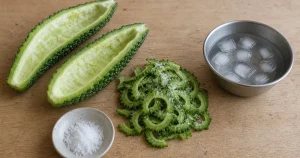
A light salt rub helps remove surface prickles, dirt, and some of the raw green smell. In Japan, some cooks also rub the cut stem end against the cut surface until a pale foamy liquid appears. This old prep method is used to tone down earthy bitterness and raw flavor near the cut end.
4. Salt for 10 to 15 minutes before dressing
This step matters more with Japanese cucumbers because they release water quickly. Salt them lightly, let them sit for 10 to 15 minutes, drain the water, and pat them dry before adding the dressing.
5. If you want stronger flavor pickup, crack them instead of slicing them thin
Lightly smashing the cucumber before cutting creates rough edges that hold dressing better.
How should you store Japanese cucumbers?
Bag them, refrigerate them, store them upright if possible, and use them within 2 to 3 days for the best texture.
Keep them in a produce bag or loosely wrapped to slow moisture loss. If you bought several at once, lining the bag with a paper towel helps control excess surface moisture.
Japanese cucumber FAQ
Are Japanese cucumbers really seasonal if stores sell them all year?
Yes. They are available year-round, but late spring through summer is the most practical buying season for price, texture, and quality.
What is the biggest difference between Japanese and Taiwanese cucumbers?
Japanese cucumbers have thinner skin, a greener raw aroma, and faster water release. Taiwanese cucumbers hold up better in stronger dressings.
Do I need to peel cucumbers from Japanese supermarkets?
Usually no. Washing and trimming the ends is enough. Peel a few stripes only if you want a more delicate texture.
Why do cucumber salads in Japan turn watery so quickly?
Because the cucumber was dressed before enough water was drawn out. Salt first, wait 10 to 15 minutes, then dress.
Where is the bitterness strongest?
Usually near the ends, especially the stem end.
Closing
Japanese cucumbers are not difficult to use. They just follow a different set of rules. They are excellent for raw eating and cleaner cold dishes, but they need better prep before strong seasoning. Taiwanese cucumbers are better when you want the cucumber itself to keep more structure after mixing.
Once you adjust for that difference, your results become much more consistent whether you are making Taiwanese-style cucumber salad, Japanese salt pickles, or lunchbox side dishes.
Sources
- Kagome VEGEDAY: seasonality, how to choose, storage, bitterness, and salt-rub prep
- JapanCrops: year-round supply and peak-season overview in Japan
- Taiwan Agricultural Products Map: Cucumbers: common cucumber varieties in Taiwan
- News & Market: Taiwan cucumber variety background and breeding context
- FoodsLink: General cucumber overview
- FoodsLink: Cucumber varieties
- FoodsLink: Suyo cucumber
- FoodsLink: Sichuan cucumber
- FoodsLink: Freedom cucumber
- FoodsLink: Larino cucumber