Salted egg bitter melon is the kind of summer dish that tastes better when it is not trying to hide the bitterness completely. The goya stays lightly crisp, the salted egg yolk turns sandy and golden, and the first salty bite slowly becomes a clean bitter-sweet finish.
In Japan, the difficult part is not the stir-fry itself. It is choosing the right substitute for Taiwanese white bitter melon and finding salted egg. Okinawan green bitter melon, ゴーヤ, is much easier to find in summer. It is more bitter than Taiwanese white bitter melon, so the prep matters more.
The three rules I would keep are simple: scrape out the white pith, salt the slices before stir-frying, and cook the salted egg yolk until it foams before adding the bitter melon back. Add the egg white only at the end so the dish does not become too salty.
Can Okinawan goya replace Taiwanese white bitter melon?
Yes, and it is probably the most realistic choice if you live in Japan. Taiwanese white bitter melon is harder to find, while Okinawan goya appears in regular supermarkets during summer.
The difference is texture and bitterness. Taiwanese white bitter melon is thicker, softer and usually milder. Okinawan goya is greener, crunchier and more direct in bitterness. For salted egg bitter melon, that bitterness is not a problem as long as it is clean. The fat and aroma from salted egg yolk help round it out.
For a softer result, scrape the inside well, slice the goya about 0.3–0.4 cm thick, salt it for 10 minutes, then rinse and squeeze dry. If you want the full prep method, see the English guide to reducing bitterness in Okinawan bitter melon.
Where to buy salted egg in Japan
I would not replace salted egg with a normal chicken egg for this dish. A normal egg gives you bitter melon with egg, but it cannot create the sandy, oily salted-yolk coating that makes this dish taste like jinsha bitter melon.
- Chinese grocery stores and Asian supermarkets: usually the highest success rate. Look for salted duck egg,
咸鸭蛋,鹹鴨蛋, or salted egg yolk. - Gyomu Super: some branches carry Chinese, Southeast Asian, or frozen ingredients, so it is worth checking.
- Online Asian ingredient shops: the safest backup if you do not live near an Asian supermarket.
Choose whole cooked salted eggs if possible. The yolk gives the aroma and sandy texture; the white gives saltiness. If you can only buy yolks, use two yolks and season the final dish with a small amount of salt or soy sauce.
Four points that make the dish work
1. Do not cut the goya too thick
If Okinawan goya is too thick, the outside tastes salted and fragrant while the inside stays sharply bitter. Thin half-moon slices, about 0.3–0.4 cm, are the easiest to season without turning mushy.
2. Mash the salted egg yolk before frying
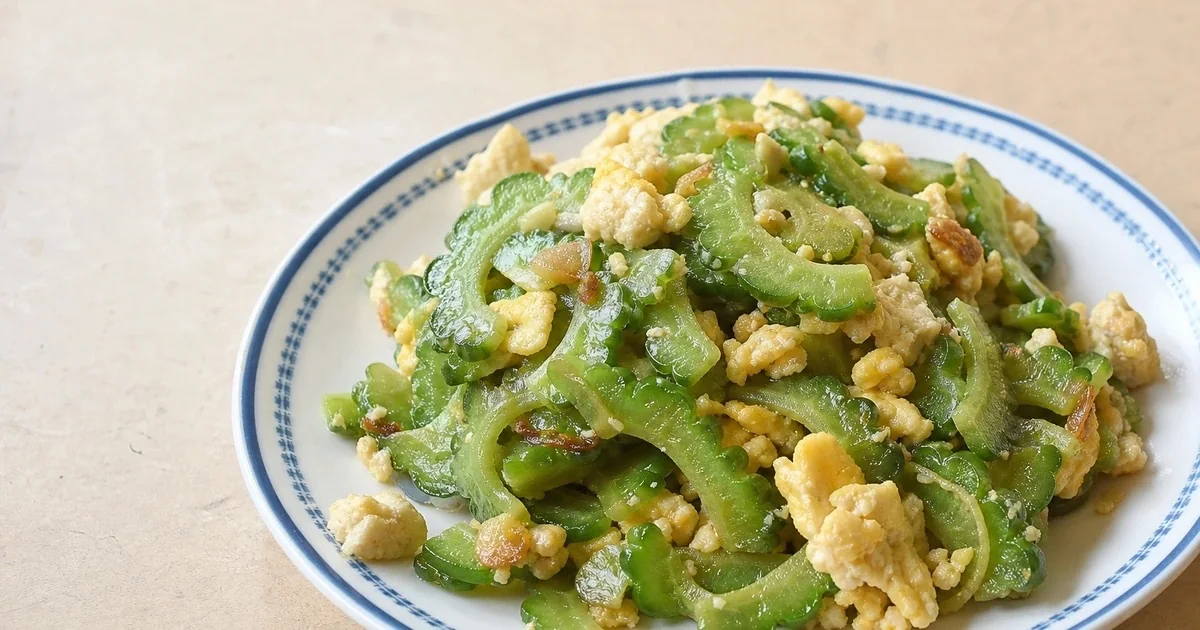
A whole yolk can scorch on the outside before it breaks down. Mash it with a fork first, then cook it slowly in oil until it turns into fine golden bubbles. That is the “sandy” texture you want.
3. Add salted egg white at the end
Salted egg white is usually very salty. Chop it small, add half first, taste, then decide whether the rest is needed.
4. Keep a little crunch
This dish should not taste like stewed bitter melon. Stir-fry briefly, let the yolk coat the slices, and stop while the edges are tender but the center still has a little bite.
Recipe card: Taiwanese salted egg bitter melon
The recipe below uses Okinawan goya, one cooked salted egg, garlic, and a little rice wine or sake. It is built for a small Japan kitchen and a two-person side dish.
Ingredients
Method
- Wash the bitter melon, halve it lengthwise, and scrape out the seeds and white inner pith with a spoon. For Okinawan goya, scrape thoroughly because the white pith can taste especially sharp. Slice into 0.3–0.4 cm half-moons.
- Toss the slices with 1/2 teaspoon salt and rest for 10 minutes. Rinse quickly, then squeeze or drain well. This does not remove all bitterness, but it makes the flavor cleaner and less harsh.
- Peel the cooked salted duck egg. Mash the yolk with a fork and chop the white into small pieces. Keep the white aside because it is very salty and should be added only at the end.
- Heat a little oil over medium heat and stir-fry the bitter melon for 1–2 minutes, until the color turns brighter and the edges just begin to soften. Remove it from the pan.
- Add more oil to the same pan, lower the heat, and cook the garlic until fragrant. Add the mashed salted egg yolk and push it gently with the spatula until it bubbles into a fine, sandy foam. Do not let it darken.
- Return the bitter melon to the pan and toss until the slices are coated with salted egg yolk. Splash the rice wine or sake around the pan edge so the aroma opens up.
- Add white pepper and a little sugar if using. Add half of the chopped salted egg white, taste, then add more only if needed. Stop cooking while the goya still has a little crunch and the surface is coated with golden salted yolk.
Notes
- Salted egg white is very salty. Add it in batches and taste before adding all of it.
- If you can only buy salted egg yolks, use 2 yolks and add a small amount of salt or soy sauce at the end.
- Okinawan goya is usually more bitter than Taiwanese white bitter melon. Scrape the pith well and salt the slices before stir-frying.
- Flavor score: gently bitter, savory, sandy from the yolk; about 3/5 for bitterness.
- Estimated cost in the source article was about NT$90 for 2 servings; in Japan it varies with supermarket and Asian grocery prices.
FAQ
Related reading: If salted eggs are hard to find, the next English migration target will cover homemade salted eggs. For another goya dish, see Taiwanese stuffed bitter melon with Okinawan goya.
Yes. Okinawan goya is more bitter and crunchier than Taiwanese white bitter melon, but it works well if you scrape out the white pith, slice it thinly, salt it for 10 minutes, rinse, and drain before stir-frying.
Check Chinese grocery stores, Asian supermarkets, some Gyomu Super branches, or online Asian ingredient shops. Look for salted duck egg, 咸鸭蛋, 鹹鴨蛋, or salted egg yolk. Whole cooked salted eggs are easiest because you can separate yolk and white.
Mash the cooked salted egg yolk first, then cook it gently with oil over low heat until it becomes fine bubbles. Return the bitter melon only after the yolk is foamy; add the salted egg white at the end for seasoning.
A normal egg will make bitter melon with scrambled egg, not salted egg bitter melon. Homemade salted chicken eggs can work, but the aroma and oiliness are usually weaker than salted duck egg yolk.
Scrape out the seeds and white pith thoroughly, slice the goya thinly, salt it for about 10 minutes, then rinse and squeeze dry. This keeps a clean bitter finish without the rough, sharp edge.
It is best eaten the same day. You can refrigerate and reheat it, but the goya softens and the salted egg yolk loses some aroma. For a lunch box, stop cooking while the goya is still slightly crisp.
A calm summer ending
Salted egg bitter melon is not supposed to become a completely non-bitter dish. Its charm is the way the clean bitterness meets the sandy salted yolk and then turns sweet at the end. With a bowl of rice, tomato egg, or garlic steamed shrimp, it becomes the kind of summer dinner that feels close to home even when you are cooking in Japan.