Ingredients
Method
Method
- Wash the bitter melon, halve it lengthwise, and scrape out the seeds and white inner pith with a spoon. For Okinawan goya, scrape thoroughly because the white pith can taste especially sharp. Slice into 0.3–0.4 cm half-moons.
- Toss the slices with 1/2 teaspoon salt and rest for 10 minutes. Rinse quickly, then squeeze or drain well. This does not remove all bitterness, but it makes the flavor cleaner and less harsh.
- Peel the cooked salted duck egg. Mash the yolk with a fork and chop the white into small pieces. Keep the white aside because it is very salty and should be added only at the end.
- Heat a little oil over medium heat and stir-fry the bitter melon for 1–2 minutes, until the color turns brighter and the edges just begin to soften. Remove it from the pan.
- Add more oil to the same pan, lower the heat, and cook the garlic until fragrant. Add the mashed salted egg yolk and push it gently with the spatula until it bubbles into a fine, sandy foam. Do not let it darken.
- Return the bitter melon to the pan and toss until the slices are coated with salted egg yolk. Splash the rice wine or sake around the pan edge so the aroma opens up.
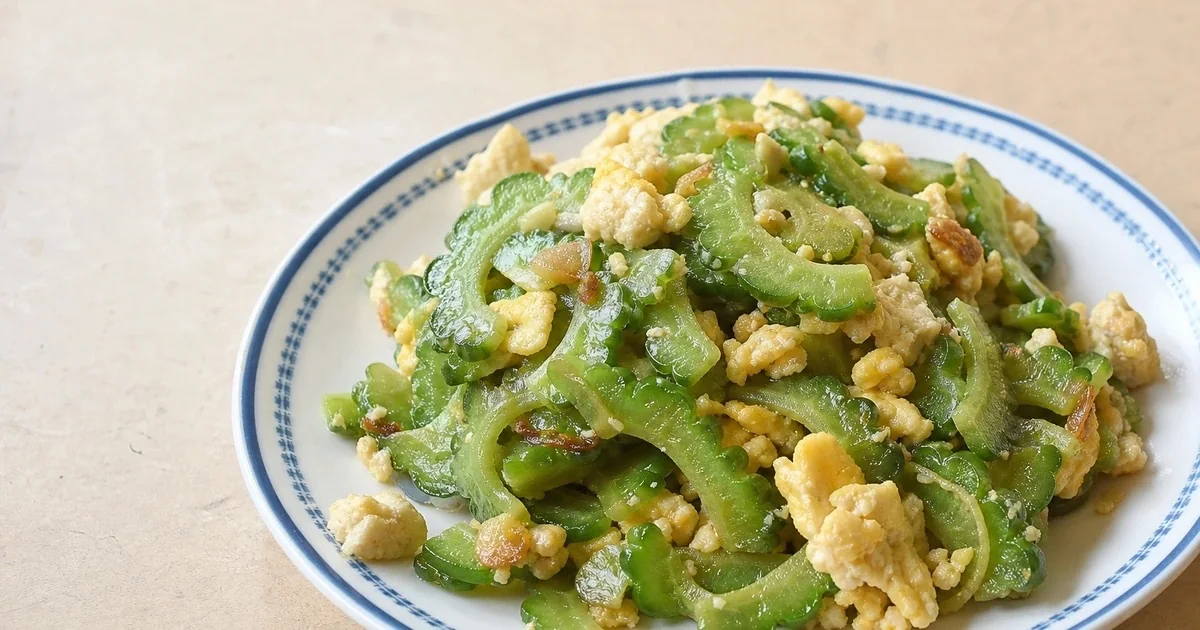
- Add white pepper and a little sugar if using. Add half of the chopped salted egg white, taste, then add more only if needed. Stop cooking while the goya still has a little crunch and the surface is coated with golden salted yolk.
Notes
- Salted egg white is very salty. Add it in batches and taste before adding all of it.
- If you can only buy salted egg yolks, use 2 yolks and add a small amount of salt or soy sauce at the end.
- Okinawan goya is usually more bitter than Taiwanese white bitter melon. Scrape the pith well and salt the slices before stir-frying.
- Flavor score: gently bitter, savory, sandy from the yolk; about 3/5 for bitterness.
- Estimated cost in the source article was about NT$90 for 2 servings; in Japan it varies with supermarket and Asian grocery prices.