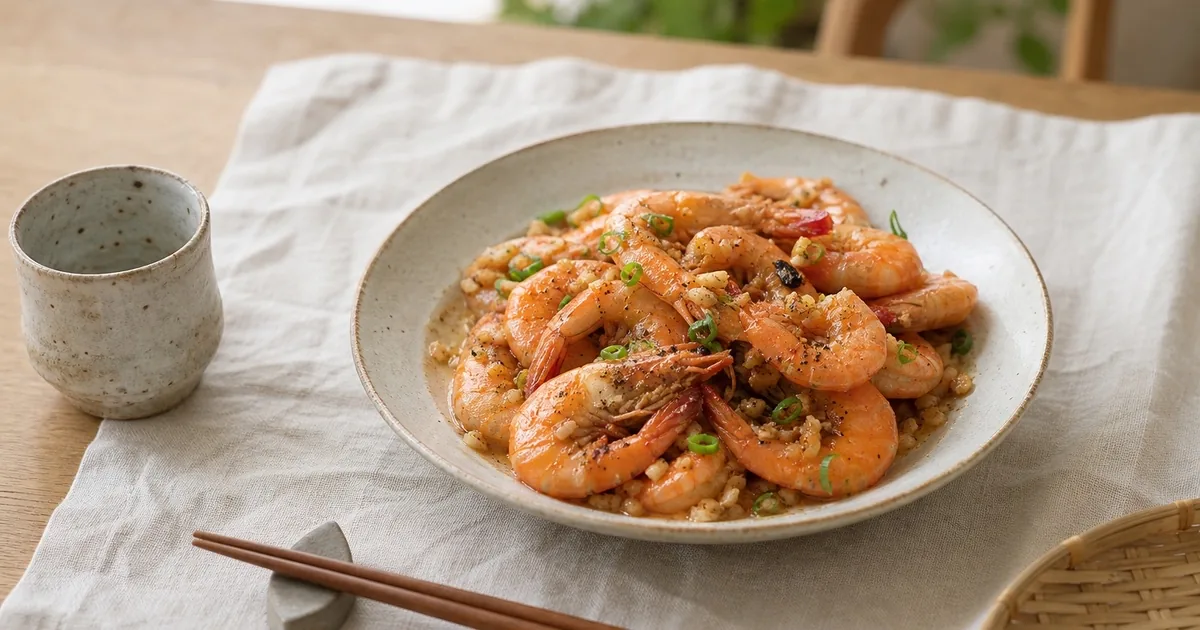
When shell-on shrimp hit a hot pan and turn red, the kitchen starts to smell like roasted shells, garlic, and pepper. That is the flavor this dish is built around: not a heavy sauce, but shrimp oil clinging to the shell.
This garlic double-pepper shrimp is the kind of low-effort seafood dish I like to make with frozen shell-on shrimp in Japan. Thaw the shrimp under cold running water, trim and devein them, dry them well, and they can go straight into the pan. No marinade is needed. The real work is to fry the shells first, bloom black pepper and white pepper in the shrimp oil, then let minced garlic coat everything at the end.
The finished shrimp should feel dry and fragrant, with lightly golden garlic bits on the shell. Black pepper leads with aroma, white pepper stays in the finish, and the shrimp shells carry both. It works with rice, with beer, or as the bold seafood dish in a simple weeknight dinner.
What makes this garlic pepper shrimp work
The ingredient list is short, but the order matters more than the amount of seasoning.
Do not throw the shrimp, garlic, and peppers into the pan all at once. Cook it in three stages:
- Fry the shrimp shells first: use medium-high heat until the shells turn red and the edges smell roasted.
- Bloom the peppers in shrimp oil: after the shrimp comes out, use the oil left in the pan to wake up the coarse black pepper and white pepper.
- Add garlic near the end: garlic burns easily. Let the peppers bloom first, then add garlic, and finally return the shrimp so the shell picks up the garlic-pepper oil.
This gives the dish more layers. Black pepper brings the first hit of aroma and mild heat. White pepper gives the sharper Taiwanese stir-fry finish. Garlic ties the whole plate together with a dry, savory smell.
Can you use frozen shrimp?
Yes. Shell-on frozen shrimp work well here.
You do not need to thaw them in the refrigerator overnight. Put the frozen shrimp under cold running water until the bodies soften and bend naturally, then start cleaning them.
- Trim off the whiskers, legs, and sharp points.
- Remove the vein.
- Pat the shrimp very dry with kitchen paper.
- Cook them directly without marinating.
If the surface stays wet, the pan cools down and the shrimp will steam before the shells can roast. That is why drying the shrimp is the most important small step in this recipe.
Why the shrimp do not need a marinade
This dish does not rely on seasoning inside the shrimp meat. The flavor comes from the shell, shrimp oil, garlic, salt, and pepper coating.
If you salt the shrimp too early, the meat can release moisture. More water in the pan makes it harder to get the dry shell aroma. Instead, dry the thawed shrimp, heat the pan well, fry the shells until fragrant, and season near the end.
Why bloom the two peppers first?
If black pepper and white pepper are only sprinkled at the end, the flavor tastes more separate. It still works, but it does not cling to the shell in the same way.
For this recipe, the peppers go into the leftover shrimp oil for just 5–8 seconds. Heat releases their aroma quickly, and then the garlic and shrimp carry that fragrance. Do not cook the pepper until it darkens; especially with white pepper powder, too much heat can turn bitter.
Ingredients
Main ingredients
- 500 g frozen shell-on shrimp
- 8–10 cloves garlic
- 2.5–3 tablespoons neutral cooking oil
- About 1/2 teaspoon salt, added in stages
- 1/2–1 teaspoon coarse black pepper
- 1/4 teaspoon white pepper powder
Optional additions
- 1 chili, sliced
- A little chopped scallion
- 1 teaspoon Taiwanese rice wine or a suitable cooking wine substitute, optional
Buying ingredients in Japan
Look for 冷凍えび or 殻付きえび for frozen shell-on shrimp, 粗挽き黒こしょう for coarse black pepper, ホワイトペッパー for white pepper, and にんにく for garlic. Headless shell-on shrimp are fine. If your shrimp are large, add about 30–60 seconds to the frying time, but avoid long stir-frying or the meat will turn tough.
How to make garlic double-pepper shrimp
1. Thaw the frozen shrimp under cold water
Take the shell-on shrimp from the freezer and thaw them under cold running water. Stop when the shrimp soften and bend naturally. Do not use hot water, which can partially cook the surface.
2. Trim, devein, and dry the shrimp
Trim the whiskers, legs, and sharp points. Remove the vein, then pat every shrimp very dry with kitchen paper. This decides whether the shells can fry fragrant instead of steaming.
3. Mince the garlic
Mince the garlic, but do not turn it into a fine paste. A little texture is good. Divide the garlic into two portions: one for the base aroma, and one added when the shrimp returns to the pan.
4. Fry the shrimp first
Heat the pan well and add 2.5–3 tablespoons oil. Add the dried shrimp in one layer. Do not stir right away. Fry over medium-high heat until the shells turn red and the edges smell roasted, about 1.5–2 minutes per side. Remove the shrimp first.
5. Bloom the black and white pepper
Leave about 1 tablespoon oil in the pan. Pour off extra oil if needed, or add a little if the pan is dry. Lower to medium-low heat, add the coarse black pepper and white pepper, and stir for 5–8 seconds until fragrant. Do not let the pepper burn.
6. Add the first half of the garlic
Add half of the minced garlic immediately. Fry over medium-low heat until just pale golden, about 20–30 seconds. Do not take it to a deep brown color.
7. Return the shrimp and season
Return the shrimp to the pan. Add the remaining garlic and start with about 1/4 teaspoon salt. Turn the heat back to medium-high and toss for 30–60 seconds, until the garlic, pepper oil, and salt coat the shells. Taste and adjust with more salt or black pepper if needed.
8. Serve hot
Take the shrimp out when the garlic clings to the shells, the pepper aroma is clear, and there is not much liquid left in the pan. This dish is best hot, while the shells still smell roasted and the garlic bits are dry.
Success tips
1. Dry the shrimp very well
This is the most important step. Frozen shrimp carry water after thawing. If you skip drying, the pan temperature drops and the shells will not develop that roasted aroma.
2. Add garlic in two stages
Garlic burns if it goes in too early. The first half builds the base aroma; the second half keeps the final shrimp more garlicky.
3. Bloom the peppers briefly
Black pepper and white pepper should touch hot oil, but only briefly. Five to eight seconds is enough. Once you smell the pepper, add garlic right away.
4. Add salt in stages
Most of the seasoning stays on the shell. Too much salt at once can make the outside harsh. Start with 1/4 teaspoon near the end, then adjust.
Recipe card
Ingredients
Method
- Thaw the frozen shell-on shrimp under cold running water until they soften and bend naturally. Do not use hot water.
- Trim the whiskers, legs, and sharp points. Remove the vein, then pat the shrimp very dry with kitchen paper.
- Mince the garlic and divide it into two portions.
- Heat a pan well, add the oil, and spread the shrimp in one layer. Fry over medium-high heat until the shells turn red and smell roasted, about 1.5–2 minutes per side. Remove the shrimp.
- Leave about 1 tablespoon shrimp oil in the pan. Add black pepper and white pepper over medium-low heat and stir for 5–8 seconds, just until fragrant.
- Add half of the minced garlic and fry until pale golden, about 20–30 seconds. Do not brown it deeply.
- Return the shrimp to the pan. Add the remaining garlic and start with 1/4 teaspoon salt. Toss over medium-high heat for 30–60 seconds until the shells are coated with garlic-pepper oil.
- Taste and adjust with more salt or black pepper. Serve when the pan is mostly dry and the garlic clings to the shells.
Notes
FAQ
No. For this dish, you can thaw shell-on frozen shrimp under cold running water. Once the shrimp bend naturally and feel soft, trim, devein, dry them very well, and cook right away.
I recommend removing the vein. Even with the shell on, you can use a toothpick around the second or third back segment to pull it out. It makes the finished shrimp cleaner and more pleasant to eat.
The flavor comes from the shell, shrimp oil, garlic, salt, and the two peppers. Marinating can draw moisture out of the shrimp, which makes it harder to fry the shells until dry and fragrant.
Using both gives the dish its shape. Black pepper brings the first aroma and gentle heat; white pepper gives a sharper aftertaste that feels closer to a Taiwanese stir-fry shop.
You can, but the aroma will stay more on the surface. Briefly blooming the peppers in shrimp oil for 5–8 seconds helps the fragrance cling to the shells.
Usually the heat is too high or the garlic cooks too long. Fry it only until pale golden, not deep brown. Splitting the garlic into two additions also keeps the aroma fresher.
Yes, but this version is meant to be a dry Taiwanese-style stir-fry, not a butter garlic shrimp. If you want butter, add a small piece near the end instead of frying the shrimp in butter from the start.
You can, but the flavor will be different. Shell-on shrimp create the shrimp oil and dry shell aroma that make this dish work; peeled shrimp are better for a quick garlic shrimp stir-fry.
This shrimp is at its best in the first few minutes after cooking, when the shell still smells like hot shrimp oil and the garlic sticks to your fingers a little. Put it in the middle of the table, peel slowly, and let the plate disappear while everyone keeps reaching for one more.