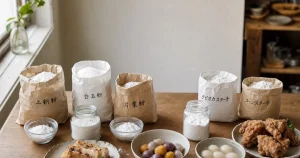
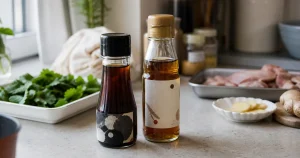
If a Taiwanese recipe asks for a spoonful of mi jiu (Taiwanese rice wine), the easiest substitute in Japan is unsalted cooking sake or regular sake. Use it 1:1 for everyday stir-fries, marinades, steaming, and odor removal. When the wine itself is the main flavor — sesame oil chicken, shochu chicken, ginger duck-style soups — rice shochu is usually a better direction, but it needs dilution and simmering.
The bottle that causes the most trouble is salted Japanese cooking sake. It can work in a pinch, but it also brings salt into the dish. If you use it, reduce soy sauce, salt, miso, or doubanjiang later. This guide keeps the logic practical for cooking Taiwanese food in Japan, not for building a bar shelf.
Best Taiwanese rice wine substitute in Japan
For small amounts of rice wine, I use unsalted cooking sake first. It gives a clean rice-based aroma, does not make the dish sweet, and behaves much like the one tablespoon of rice wine used in many Taiwanese home recipes. Regular sake works too; there is no need to buy expensive ginjo for cooking.
| Cooking situation | First choice | Ratio | Adjustment |
|---|---|---|---|
| Stir-fried vegetables, eggs, sliced meat | Unsalted cooking sake or regular sake | 1:1 | Closest to the “small splash for aroma” role |
| Marinades, fish, steamed shrimp | Unsalted cooking sake | 1:1 | If using salted cooking sake, reduce soy sauce or salt |
| Lu rou, red-braised dishes, three-cup chicken | Sake or cooking sake | 1:1 | Add a little rice shochu if you want a stronger Taiwanese wine note |
| Sesame oil chicken, shochu chicken, ginger-duck style dishes | Rice shochu or pure rice shochu | Start at 70–100% of the rice-wine amount | Higher alcohol; simmer and adjust liquid |
| Only salted cooking sake is available | Salted cooking sake | 1:1 only for small amounts | Emergency use; reduce salt elsewhere |
One-line rule: small rice-wine amount → sake; large rice-wine flavor → rice shochu; salted cooking sake → only a small emergency substitute.
Taiwanese rice wine, Japanese cooking sake, sake, and rice shochu
Taiwanese red-label cooking rice wine is valued for its rice aroma, alcohol lift, and ability to remove meat or seafood odor. The reference bottle from Taiwan Tobacco & Liquor is made from rice through saccharification, fermentation, distillation, and blending, and is about 19.5% alcohol. In Taiwanese cooking, it is not mainly a sweetener; it is a clean, warming cooking wine.
Japanese 料理酒 is more complicated because the front label does not tell the whole story. Some bottles contain salt (食塩). Those are convenient in the supermarket seasoning aisle, but the salt becomes part of your dish. If the Taiwanese recipe already includes soy sauce, salt, miso, or bean paste, the finished pot can become too salty.
Regular sake or unsalted cooking sake has a clean flavor and suits most Taiwanese home dishes. Rice shochu (米焼酎 or 純米焼酎) is a distilled spirit, so the alcohol impression is stronger. That is why it helps in dishes where Taiwanese rice wine should be obvious, not just quietly in the background.
| Chinese / Taiwanese term | Japanese label to look for | Fit | Note |
|---|---|---|---|
| Taiwanese rice wine / red-label rice wine | 台湾米酒, 米酒, ミーチュウ | Closest | Usually Asian groceries or online |
| Unsalted cooking sake | 料理清酒, 食塩無添加, 清酒 | Very good | Check the back label, not only the front |
| Salted cooking sake | 料理酒, 醸造調味料, 食塩 | Emergency only | Reduce soy sauce and salt |
| Sake / Japanese sake | 清酒, 日本酒, 純米酒 | Very good | Affordable bottles are enough for cooking |
| Rice shochu | 米焼酎, 純米焼酎 | Good for strong wine-aroma dishes | Higher alcohol; simmer and dilute if needed |
How to substitute by dish: stir-fry, marinade, braise, sesame oil chicken
Different Taiwanese dishes do not need the same kind of alcohol. Some only need a little alcohol to lift aroma from the hot pan; others use rice wine as the backbone of the soup.
Stir-fries and eggs: sake is the easiest
For tomato eggs, stir-fried greens, or sliced meat, rice wine is usually a small splash. Replace it 1:1 with sake or unsalted cooking sake. Add it around the side of the hot pan so the alcohol evaporates quickly and leaves aroma.
If your only option is salted cooking sake, season later. Start with half the usual salt or soy sauce, taste near the end, then adjust.
Marinades and odor removal: keep it clean
For pork, fish, shrimp, or chicken marinades, use sake or unsalted cooking sake. A simple base is 300 g meat with 1 tablespoon sake, 1 tablespoon soy sauce, and a little white pepper. If the sake feels too gentle, add only 1 teaspoon rice shochu; too much shochu can overpower the meat.
Braises and three-cup dishes: sake as the base, shochu for warmth
For lu rou, red-braised pork, or three-cup chicken, sake 1:1 is stable. If you miss the warmer Taiwanese rice-wine note, split the liquid: for 100 ml rice wine, use 80 ml sake plus 20 ml rice shochu. That gives rice aroma and alcohol lift without making the dish harsh.
Sesame oil chicken: rice shochu helps, but do not pour blindly
Sesame oil chicken is where the difference is easiest to taste. Sake can work, but it tastes softer. If you want the rice wine to stand out, start with rice shochu. For a recipe that calls for 600 ml rice wine, try 400 ml rice shochu plus 200 ml water or sake first. Bring it to a boil, then simmer gently for 10–15 minutes so the sharp alcohol edge softens into the ginger and sesame oil.
For children, pregnant people, people avoiding alcohol, or anyone sensitive to alcohol, do not assume “cooked” means alcohol-free. Make a non-alcohol version or cook a separate portion.
Substitution ratio table
| Original Taiwanese rice wine | Sake / unsalted cooking sake | Rice shochu | Salted cooking sake |
|---|---|---|---|
| 1 teaspoon | 1 teaspoon | 1/2–1 teaspoon | 1 teaspoon, reduce salt slightly |
| 1 tablespoon | 1 tablespoon | Start with 2 teaspoons | 1 tablespoon, reduce soy sauce by 1/4–1/2 teaspoon |
| 50 ml | 50 ml | 35–50 ml, add water if needed | Possible, but season carefully |
| 100 ml | 100 ml | 70–100 ml depending on alcohol strength | Not recommended in large amounts |
| 500 ml or more | Usable but softer | Start with 70% rice shochu + 30% water or sake | Do not use as the main liquid |
Treat this table as a starting point. Japanese brands vary a lot. The first time you cook a dish, begin conservatively. It is easier to add one more teaspoon near the end than to rescue a pot that tastes too boozy or too salty.
Where to buy in Japan
In Japan, I look at the back label first. The most useful words are 料理清酒, 食塩無添加, 清酒, 日本酒, 米焼酎, and 純米焼酎.
- Supermarket seasoning aisle: look for 料理清酒, 食塩無添加, or 清酒.
- Alcohol section: affordable 日本酒 or 純米酒 is enough for cooking.
- Liquor shops, Gyomu Super, big-box stores: useful if you cook often and want larger bottles.
- Asian groceries or online: search 台湾米酒, 紅標米酒, or ミーチュウ.
- For sesame oil chicken: check the alcohol section for 米焼酎 or 純米焼酎 and read the alcohol percentage.
If you only want one bottle at home, buy unsalted cooking sake. If you often make sesame oil chicken, three-cup chicken, or ginger duck-style dishes, keep a small bottle of rice shochu as well.
When to avoid salted cooking sake
Salted cooking sake is easy to buy and easy to misuse. It can remove odor and add flavor, but its salt stacks with soy sauce, salt, miso, oyster sauce, or doubanjiang. A spoonful in a stir-fry is manageable. A whole pot of sesame oil chicken made with salted cooking sake can turn into salty soup.
If the recipe needs only a teaspoon or tablespoon, salted cooking sake can be an emergency substitute. If the recipe needs 100 ml or more, switch to regular sake, unsalted cooking sake, or rice shochu plus water.
- For the closest everyday substitute, choose unsalted cooking sake or regular sake.
- For strong Taiwanese wine aroma, add rice shochu carefully.
- When you see 食塩 on the label, treat it as a salted seasoning, not as neutral cooking wine.
FAQ
Yes, if it is unsalted cooking sake or regular sake, use it 1:1 for stir-fries, marinades, steaming fish, or small amounts of deglazing. If the label includes 食塩, reduce soy sauce or salt and avoid using it as the main liquid in soup-style dishes.
For everyday cooking, unsalted cooking sake or regular sake is the safest substitute. For sesame oil chicken or shochu chicken, rice shochu gives a stronger alcohol aroma that feels closer to the role of Taiwanese rice wine.
Start with about 70% of the original rice-wine amount as rice shochu, then make up the remaining liquid with water or sake. Bring it to a boil and simmer so the alcohol sharpness softens before serving.
Many Japanese bottles sold as 料理酒 contain salt. They are useful in small amounts for removing odor, but the salt stacks with soy sauce, miso, doubanjiang, or added salt. Check the ingredient label and season more lightly.
I would not use it that way. Salted cooking sake is fine as an emergency spoonful, but for 100 ml or more, use regular sake, unsalted cooking sake, or rice shochu plus water so the dish does not turn into a salty broth.
Calm practical ending
You do not have to wait until you find red-label Taiwanese rice wine before cooking Taiwanese food in Japan. For everyday dishes, sake or unsalted cooking sake is steady and forgiving. For dishes where the wine aroma is part of the soul, rice shochu can help as long as you dilute, simmer, and taste. Avoid using salted cooking sake as the main soup liquid, and the dish will stay much closer to the Taiwanese home flavor you are trying to reach.
References
- Taiwan Tobacco & Liquor red-label cooking rice wine product information: rice base, saccharification, fermentation, distillation, blended edible alcohol, 19.5% alcohol.
- Sawanotsuru information on the difference between sake and cooking sake and how they are used in cooking.
- Taiwanese home-cooking experience in Japan comparing red-label rice wine, Japanese cooking sake, and pure rice shochu as substitutes.