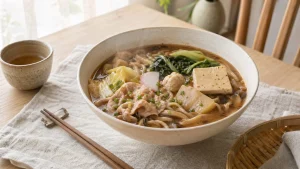
You sit down for a quick weeknight dinner — and somehow, before you even realize it, your rice bowl is empty. Then you refill it. Taiwanese-style mapo tofu has that effect on people. It’s silky, savory, just the right amount of spicy, and absolutely made for pouring over a mountain of steamed rice. If you’ve only ever tried the Sichuan original, get ready — this gentler, glossier Taiwanese cousin might just become your new weeknight obsession.
📋 In This Article
The Origin of Mapo Tofu — and How Taiwan Made It Its Own
Mapo tofu traces its roots back to Qing Dynasty Sichuan, where a pockmarked (麻臉) woman known as Chen Mapo ran a small restaurant near Chengdu. Her dish became legendary for hitting six flavor notes at once: má (numbing), là (spicy), tàng (hot), nèn (tender), xiān (umami-fresh), and xiāng (aromatic). The original was bold, mouth-numbing, and unapologetically fiery.
When the dish traveled to Taiwan, it underwent a quiet but meaningful transformation. Taiwanese home cooks dialed back the Sichuan peppercorn, leaned into soy-sauce-based savory depth, and thickened the sauce noticeably so it clings to every cube of soft tofu. The result? A dish that’s rich and comforting rather than face-numbingly intense — one that works for grandparents and kids alike.
Today, Taiwanese-style mapo tofu is a staple at biandang lunch box shops and zìzhùcān buffet counters across Taiwan. It’s the kind of everyday comfort food that people rarely fuss over — yet somehow, it’s always the first dish to disappear.
Taiwanese vs. Sichuan Mapo Tofu: What’s the Difference?
Both versions share the same DNA — tofu, ground pork, doubanjiang, and aromatics — but the personality of each dish is quite different. Here’s a side-by-side breakdown:
| Feature | 🌶 Sichuan Original | 🟢 Taiwanese Style |
|---|---|---|
| Tofu | Firm tofu — holds its shape, slightly chewy | Silken/soft tofu — custardy, melts in the mouth |
| Sichuan Peppercorn | Generous amount — intense numbing sensation | Little to none — numbing heat dialed way back |
| Doubanjiang | Pixian doubanjiang — deeply fermented, intensely spicy | Milder, more balanced style |
| Heat Level | High spice — bold and challenging | Mild to medium — family-friendly |
| Sauce Thickness | Light glaze — minimal starch thickening | Noticeably thick — sauce coats every piece of tofu |
| Overall Vibe | Electric, numbing, spicy punch | Savory, mellow, deeply rice-friendly |
Neither version is “better” — they’re simply different experiences. But if you’re cooking for a mixed crowd in Japan and want something everyone can enjoy, the Taiwanese version is the clear winner.
Where to Buy Doubanjiang in Japan
Good news: doubanjiang (豆板醤) is widely available in Japan. Here’s what to look for:
- Lee Kum Kee Toban Djan (李錦記 豆板醤) — The easiest option. Available at most large supermarkets (イオン、西友、イトーヨーカドー). This is what we use in this recipe and it delivers great results.
- Youki Foods Toban Djan (ユウキ食品 豆板醤) — Often found at 業務スーパー in larger jars. Budget-friendly and perfectly solid for everyday cooking.
- Authentic Pixian Doubanjiang (郫縣豆瓣醤) — For the real Sichuan deal, check 成城石井 (Seijo Ishii) or カルディ (KALDI). Darker, coarser, and far more pungent — wonderful if you want to explore the Sichuan version, but not necessary here.
For this recipe, Lee Kum Kee is all you need. Consistent, approachable, and available almost everywhere.
4 Cooking Tips for Perfect Taiwanese Mapo Tofu
1. Blanch the Tofu First
Before anything hits the wok, simmer your silken tofu cubes in lightly salted water for about 2 minutes. This removes the raw beany smell and firms the tofu just enough that it won’t fall apart when you stir the sauce. Don’t skip this step.
2. Fry the Doubanjiang Until the Red Oil Separates
Add doubanjiang to the wok over medium-low heat and stir-fry for 30 seconds to 1 minute, until you see a vivid red oil begin to pool around the paste. This unlocks the deep, smoky flavor — rushing past it is the single most common mistake home cooks make.
3. Push, Don’t Stir
Once the tofu is in the sauce, resist the urge to stir. Instead, use a wooden spatula to gently push from the edges of the pan inward, rocking the tofu through the sauce without breaking it.
4. Thicken the Sauce in Two Stages
Add your cornstarch slurry in two separate additions rather than all at once. Check the consistency after the first, then add more if needed. The hallmark of a properly made Taiwanese mapo tofu is a sauce that’s glossy and clingy, not watery or gluey.
Taiwanese-Style Mapo Tofu Recipe
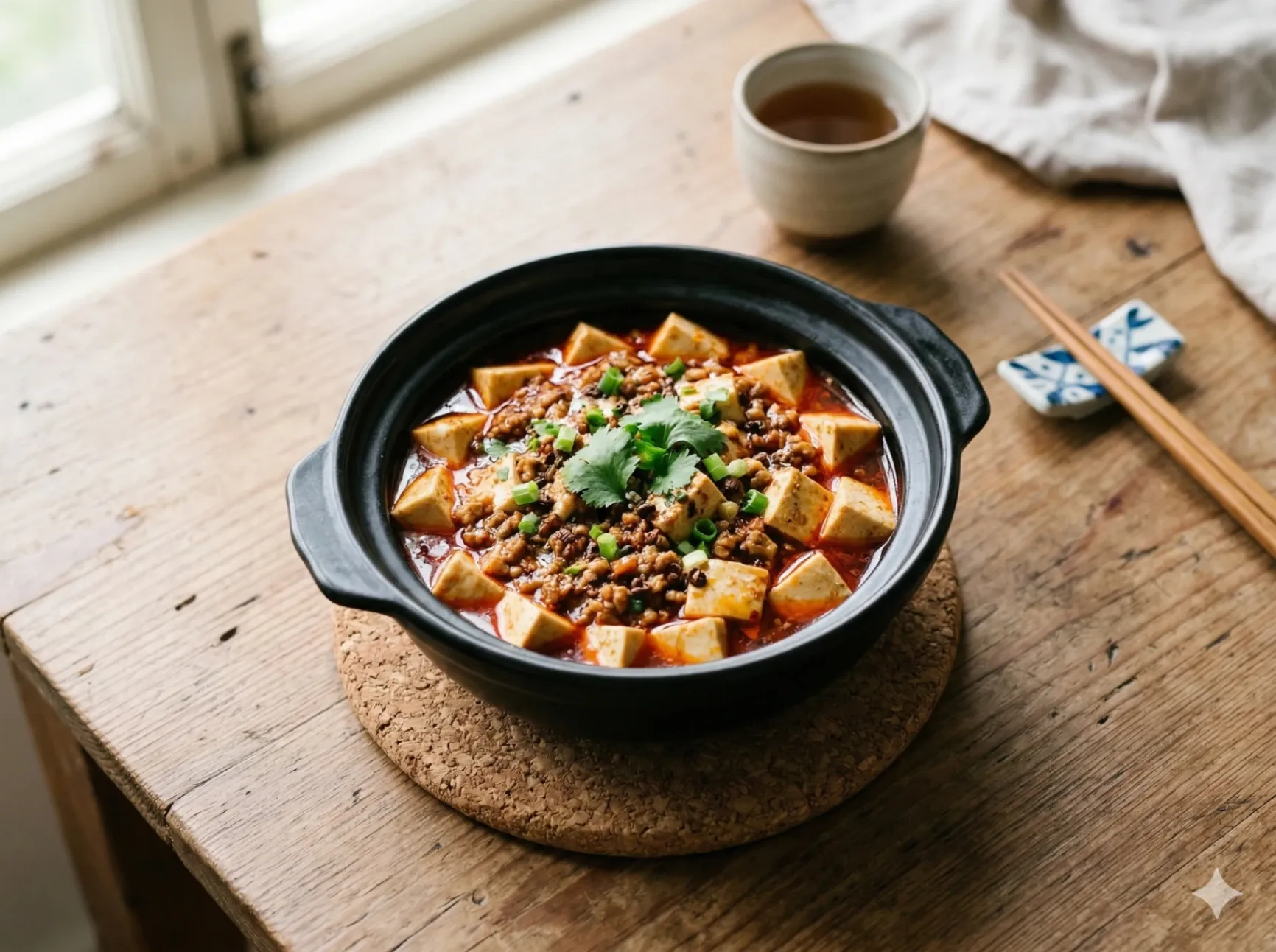
Ingredients
Equipment
Method
- Cut tofu into 2 cm cubes. Blanch in lightly salted boiling water for 2 minutes, then drain. This firms up the tofu and prevents it from falling apart during cooking.
- Heat oil in a wok over low heat. Add Sichuan peppercorns and fry gently for about 1 minute until fragrant. Remove peppercorns. Increase heat to medium, add dried chillies, garlic, and ginger. Stir-fry until aromatic.
- Add ground pork. Stir-fry until browned and crumbled. Add doubanjiang and stir-fry for 2 minutes until red oil appears around the edges.
- Add chicken stock, soy sauce, rice wine, and sugar. Stir to combine. Gently add the tofu cubes. Simmer over low heat for 3–5 minutes, nudging (not stirring) the tofu occasionally.
- Mix cornstarch with water. Add to the wok in two batches, stirring gently between each addition, until the sauce is thick enough to coat the tofu.
- Drizzle with sesame oil before turning off the heat. Serve topped with spring onion and a pinch of ground Sichuan pepper.
Notes
- Fry the doubanjiang until red oil appears around the edges — this is the key to the dish depth. Takes about 1–2 minutes on medium-low heat.
- Always blanch the tofu first. Salted boiling water removes the raw bean smell and makes it hold together better.
- Push, do not stir. Use a wooden spoon to nudge the tofu from the edges — flipping it will cause it to crumble.
- Add the cornstarch slurry in two stages — easier to control the final thickness.
- Doubanjiang is salty by nature. Taste before adding extra salt.
- In Japan: Lee Kum Kee doubanjiang is the closest match, available at AEON or Donki.
- Vegetarian version: skip the pork, use finely chopped king oyster mushrooms instead — equally satisfying.
If you’re looking for a dish that’s quick to pull together, requires minimal prep, and makes plain steamed rice taste like a five-star meal — this is it. Keep a jar of doubanjiang in your fridge and a block of silken tofu in your pantry, and you’re 20 minutes away from one of the best bowls of rice you’ll have all week. Make it once, and it’ll earn a permanent spot in your weeknight rotation.