Ginger pork stir-fry, or shogayaki, is one of those dishes that earns its place in a home kitchen because it solves a real dinner problem. It is fast, uses a short ingredient list, and still tastes complete enough to carry a bowl of rice, a pile of cabbage, and a weekday appetite.
The version that works best at home is not the one with the longest marinade. It is the one that keeps the pork tender, the ginger fresh, and the sauce glossy instead of sticky or burnt. Thin slices, a quick sauce, and a short reduction are what make the dish feel clean and deeply satisfying at the same time.
Table of Contents
Why This Ginger Pork Works
This dish works because it keeps all the classic shogayaki signals in balance. Fresh ginger lifts the pork instead of burying it. Soy sauce gives depth, mirin softens the edges, and a little sugar rounds everything out without turning the sauce sweet.
The other key is speed. Thin pork slices cook in minutes, so you get browning and sauce reduction before the meat dries out. That is why this recipe feels much better than heavier braises when you want something quick but still proper enough to count as dinner.
Best Pork Cut for Shogayaki
Pork shoulder is the easiest cut to get right here. A little fat keeps the slices tender and gives the sauce something to cling to. Pork loin is a fine option if you want a leaner result, but you need to be more careful not to overcook it.
If your pork slices are thicker than typical shogayaki cuts, give them a little more time in the pan, but still stop as soon as the color changes and the surface looks lightly glazed. This is not a stew. It should feel quick, glossy, and lively.
How to Build a Balanced Ginger Sauce
The sauce should taste savory first, then gingery, then just slightly sweet at the end. If the sugar pushes too hard, the dish starts tasting flat. If the ginger is weak, it becomes just another soy pork stir-fry.
- Fresh ginger: grated, not powdered, for the cleanest aroma.
- Soy sauce: the base of the sauce and the main source of umami.
- Mirin: adds sweetness and gloss without making the pan sauce feel heavy.
- Sake: helps the sauce taste more open and less salty.
Ingredient Notes for Cooking in Japan
This is one of the easiest Japanese home-style dishes to cook with regular supermarket ingredients in Japan. Thin pork slices, soy sauce, mirin, and sake are all standard, and shredded cabbage on the side is both traditional and practical because it catches the extra sauce well.
If your ginger is especially juicy, the sauce may feel looser at first. That is fine. Just reduce it briefly at the end until it looks glossy. If you reduce it too far, the sauce can become sharp and the pork will lose its softness.
Ginger Pork FAQ
What cut of pork is best for ginger pork?
Pork shoulder is usually the best choice because it stays tender and juicy. Pork loin works too, but it dries out faster.
Do I need to marinate the pork for a long time?
No. Five minutes is already enough for a good weeknight version. A longer marinade helps, but the main difference comes from using thin slices and not overcooking them.
Why did my sauce turn too salty or too sharp?
Usually because it was reduced too far. Leave a little liquid in the pan so the pork stays glossy instead of getting coated in a thick, aggressive glaze.
Can I add onions?
Yes. Thin onion slices are common and add sweetness. Just do not let them overcrowd the pan so the pork can still brown properly.
Ginger Pork Stir-Fry Recipe
Ingredients
Method
- Mix the grated ginger, soy sauce, mirin, cooking sake, and sugar until the sugar starts to dissolve.
- Toss the pork slices with the sauce and let them sit for 5 minutes. If you have more time, marinate them in the fridge for up to 30 minutes for deeper flavor.
- Heat the oil in a frying pan over medium-high heat. Lay the pork in a single layer and cook in batches if needed so the slices do not overlap too much.
- Cook for about 1 to 2 minutes per side, just until the pork changes color and picks up light browning.
- Pour in any remaining sauce and toss quickly over higher heat until the liquid turns glossy and lightly coats the pork. Do not reduce it too far or the sauce can catch and taste sharp.
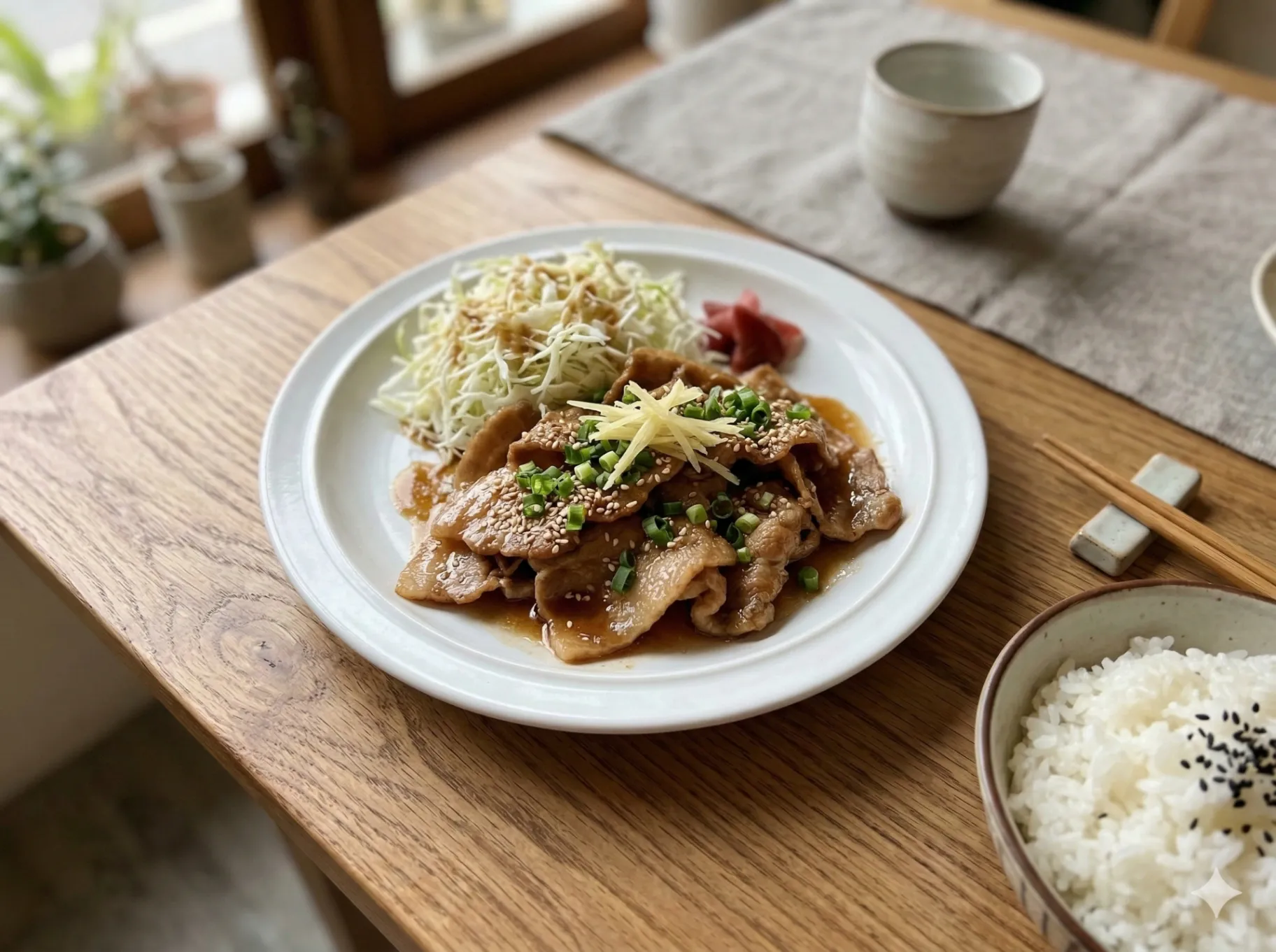
- Serve hot with shredded cabbage on the side. Finish with sesame seeds if you like.
Notes
- Pork shoulder gives the juiciest result because it has a little fat. Pork loin works too if you want a leaner plate.
- Fresh grated ginger matters here. Ginger powder will not give the same bright, aromatic finish.
- Keep a little sauce in the pan at the end. That glossy spoonful is what makes this dish especially good with rice.
Serving tip: Put the pork over hot rice, spoon over the extra pan sauce, and keep shredded cabbage on the side. That classic combination is still the best way to eat it.