This Taiwanese malatang is the kind I want when I live in Japan and do not want a heavy red-oil hot pot base. The broth is clear enough to drink, but it still has the braised aroma of doubanjiang, soy sauce, Sichuan peppercorns, star anise, cinnamon, scallion, ginger and garlic.
The point is not to make it violently spicy. It should taste like Taiwanese luwei-style malatang: savory first, gently numbing, lightly spicy, and good with tofu, atsuage, harusame, mushrooms and greens from a Japanese supermarket.
Once the soup base is steady, the ingredients can follow your refrigerator. Keep the processed fish cakes and meat slices modest, and let tofu, vegetables and mushrooms do most of the work.
Flavor direction
Taiwanese malatang is not only about heat. I want three layers in the pot: braised aroma from star anise and cinnamon, savory depth from doubanjiang and soy sauce, and gentle numbness from Sichuan peppercorns.
The doubanjiang should be fried first until it smells round and the oil turns slightly red. The spices should be used in small amounts. If you boil too much Sichuan peppercorn for too long, the broth can become sharp and bitter instead of fragrant.
Ingredients you can buy in Japan
| Role | Use | Where to look in Japan |
|---|---|---|
| Salt and depth | Soy sauce, doubanjiang / 豆板醤 | Regular supermarket, Gyomu Super, Chinese shelf |
| Braised aroma | Star anise, cinnamon; a tiny amount of five-spice powder if needed | Asian grocery, online, spice section |
| Numbing and heat | Sichuan peppercorns, chili powder, 一味唐辛子, chili oil | Chinese shelf or regular supermarket |
| Broth body | Chicken stock, kombu water, or light dashi-free stock | Regular supermarket |
| Optional Taiwanese thickness | Shacha sauce | Optional; use very little if you have it |
If you use five-spice powder instead of whole star anise and cinnamon, start with only 1/8 teaspoon. Shacha sauce is also optional. I would use from 1 teaspoon to 1 tablespoon at most, because too much makes the broth heavy and oily.
How the broth works
Fry the whole spices gently first, then remove the Sichuan peppercorns if you do not want a bitter finish. Add garlic, ginger and the white part of the scallion, then fry the doubanjiang until the color deepens.
After the stock goes in, simmer the broth for about 8–10 minutes before tasting. Make it slightly stronger than a normal drinking soup, because harusame, tofu and greens will absorb broth and release water.
Recipe card
Ingredients
Method
- Heat the oil over low heat. Fry the Sichuan peppercorns, star anise and cinnamon until fragrant. Remove the Sichuan peppercorns if you want a cleaner broth and less bitterness.
- Add garlic, ginger and the white part of the scallion. Fry until aromatic, then add the doubanjiang and cook until the color deepens and the oil turns lightly red.
- Pour in the stock. Add soy sauce and sugar. Bring to a boil, then simmer over medium-low heat for 8–10 minutes. Taste and adjust saltiness, numbness and heat.
- Add sturdy ingredients first, such as tofu, atsuage and mushrooms. Add harusame, greens and thin meat slices near the end.
- Finish with scallion greens. Add extra ground Sichuan pepper or chili oil at the table if you want more numbness or heat.
Notes
What to cook in the broth
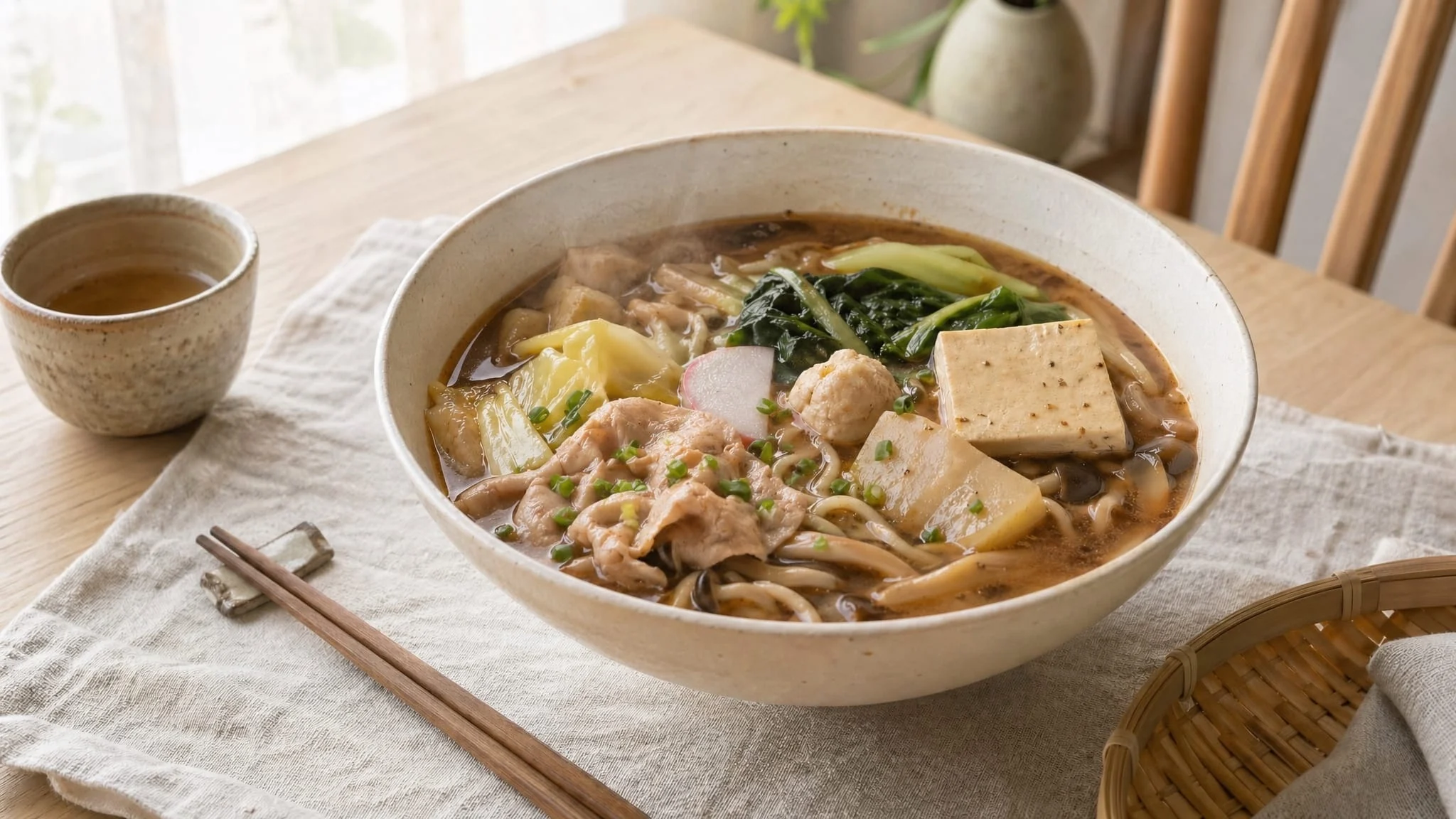
The easiest add-ins in Japan are harusame, tofu, atsuage, aburaage, mushrooms, komatsuna, cabbage and thin pork slices. They absorb the broth without making the pot too sweet.
Chikuwa, kamaboko and hot-pot fish balls are convenient, but use them lightly. They release salt and sweetness as they simmer, so the broth can quickly move away from a clean Taiwanese braised-spice flavor.
How to adjust the taste
- Too salty: add unsalted stock or water. Do not try to fix saltiness with sugar.
- Too oily: reduce shacha sauce, chili oil and processed hot-pot items next time.
- Only spicy, not fragrant: the doubanjiang was probably not fried long enough.
- Too sharp or numbing: keep Sichuan pepper powder for the end instead of boiling it for a long time.
Variations and storage
For a milder pot, add 80–120 ml unsweetened soy milk after the broth is finished. For a brighter version, fry chopped tomato first, then pour in the broth and simmer for about 5 minutes.
The plain soup base can be refrigerated for about 2 days. Store only the broth if possible. Harusame, greens and thin meat slices taste best when cooked fresh.
FAQ
No. For this lighter Taiwanese braised-spice style, doubanjiang, soy sauce, Sichuan peppercorns, star anise, cinnamon and stock are enough. The soup should taste aromatic, lightly numbing and savory, not just oily and spicy.
Yes, but use very little. For two servings, start with 1/8 teaspoon and do not go much above 1/4 teaspoon, or the broth can taste powdery and bitter.
Tofu, atsuage, harusame, mushrooms, komatsuna, cabbage, chikuwa and thin pork slices are all easy choices. Use processed fish cakes or balls lightly because they release sweetness and salt into the broth.
Yes. Cook only the soup base, cool it quickly, and refrigerate for about 2 days. Reheat it fully, then add vegetables, tofu, meat and harusame right before eating.
If it is too salty, dilute with unsalted stock or water. If it is too oily, reduce shacha sauce, chili oil and processed hot-pot items next time. Sugar will not really fix an over-salty broth.
This is a practical malatang broth for a small kitchen in Japan: one pot, supermarket-friendly add-ins, and enough Taiwanese braised-spice aroma to make dinner feel more like home without turning it into a heavy hot pot.