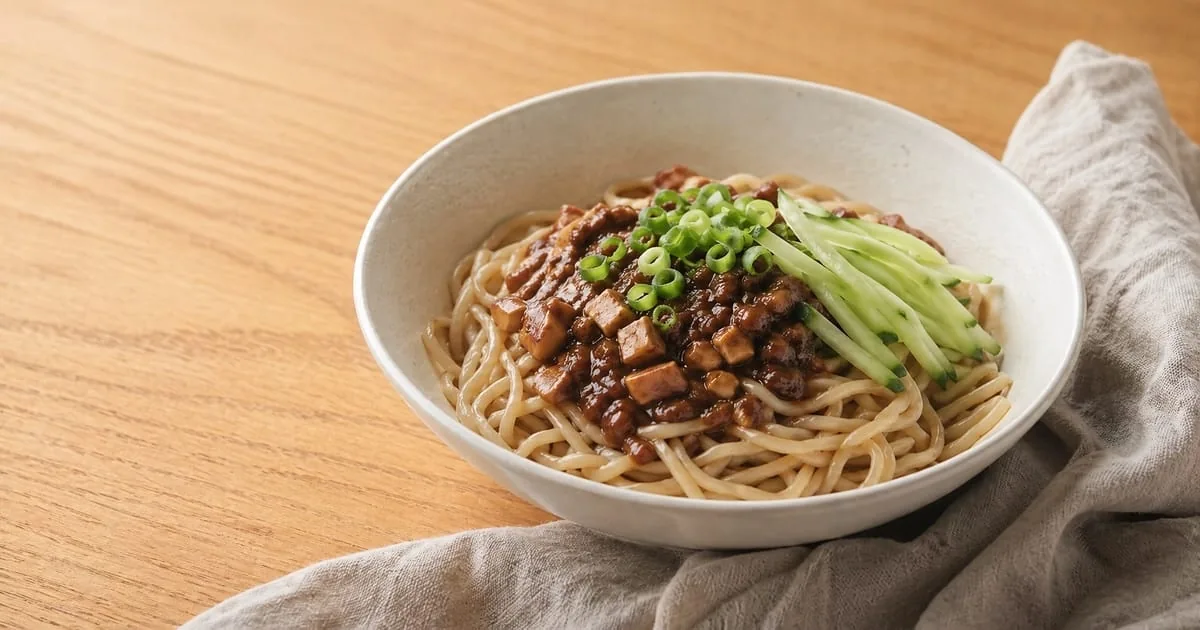
Taiwanese zhajiangmian is not the same as northern Chinese zhajiang noodles, and that difference matters if you are trying to recreate the flavor at home. The Taiwanese version leans softer, rounder, and a little sweeter. Instead of tasting dark, salty, and heavy, the sauce should feel glossy, meaty, and just rich enough to cling to the noodles without turning them into a bowl of paste.
For cooks in Japan, the real challenge is not technique. It is understanding what Taiwanese sweet flour sauce is doing in the pan, then rebuilding that role with ingredients you can actually buy. Once you see the sauce as a balance of sweetness, bean depth, and body, zhajiangmian becomes much easier to pull off in an ordinary weeknight kitchen.
Table of Contents
What Makes Taiwanese Zhajiangmian Different
Taiwanese zhajiangmian usually tastes gentler and more rounded than the Beijing-style versions many people picture first. The sauce is often built from sweet flour sauce and doubanjiang together, so you get both sweetness and savory depth. That combination gives the dish its signature “meat sauce noodle” comfort while still keeping enough structure to feel unmistakably Taiwanese.
The goal is not a harsh bean paste punch. You want a sauce that tastes meaty, lightly sweet, and glossy enough to wrap the noodles. That is why Taiwanese versions often feel especially homey: they sit somewhere between noodle-shop comfort food and a weeknight pantry dish.
How the Sauce Works
1. Sweetness softens the edges.
The sweet element is not there to make the noodles taste sugary. It rounds off the salt, bean paste, and pork so the sauce tastes full rather than sharp.
2. Doubanjiang adds structure.
A spoonful of doubanjiang brings salt, light heat, and fermented depth. Without it, the sauce can taste flat and too soft.
3. Body matters as much as flavor.
The sauce should cling to the noodles. That texture comes from cooking the paste mixture gently before adding water, then reducing it just enough to turn glossy.
Japanese Supermarket Substitutions
If you can buy tianmianjiang, use it. If you cannot, the most practical Japanese substitute is red miso + mirin + a little sugar + a little soy sauce. That mix gives you bean depth, gentle sweetness, and enough body to act like a Taiwanese-style sweet flour sauce in the pan.
- Ground pork: the easiest everyday choice. Finely diced pork belly works too if you want a richer sauce.
- Dougan substitute: pressed firm tofu or small cubes of atsuage work well when proper seasoned tofu is hard to find.
- Noodles: use Chinese wheat noodles with a bit of chew. Very thin noodles tend to disappear under the sauce.
- Cucumber: Japanese cucumbers are perfect here. Seed them if they are very watery.
Taiwanese Zhajiangmian FAQ
Why does my sauce taste too salty?
You may be using a doubanjiang or miso that is stronger than expected. Add a little water and a small pinch of sugar, then cook it briefly again until the flavor rounds out.
Why does the sauce feel watery instead of clingy?
The paste mixture probably did not spend enough time cooking before the water went in, or the final reduction was too short. Let the sauce cook gently until it looks glossy and lightly oily before serving.
Can I make this without doubanjiang?
You can, but the sauce will lose some of its salty depth and character. If you skip it, add a little more soy sauce and taste carefully so the sauce does not go too sweet.
What should I serve with it?
Cucumber is the classic topping, but a simple egg drop soup, blanched greens, or a small dish of pickles all make sense with it too.
Taiwanese Zhajiangmian Recipe
Ingredients
Equipment
Method
- Slice the scallions, mince the garlic and ginger, press the tofu dry and cut it into small cubes, and cut the cucumber into thin strips. Keep everything ready before you start cooking.
- Heat 1 tablespoon of oil in a wok or frying pan. Add the garlic and ginger and cook for about 30 seconds, then add the ground pork. Stir-fry over medium heat until the pork changes color and releases some fat.
- Add the diced tofu and cook for 1 minute. Stir in the red miso, mirin, sugar, soy sauce, and doubanjiang. Press the miso against the pan with your spatula so it melts into the pork evenly.
- Turn the heat down and keep stirring for 3 to 4 minutes. The sauce should go from grainy to glossy and thick. This low-heat stage is what gives zhajiangmian its rich, clingy texture.
- Add 50 ml of water and bring the sauce to a gentle simmer. Cook another 2 to 3 minutes until it looks shiny and lightly oily on the surface. Taste and adjust with a little more soy sauce, sugar, or water if needed.
- Boil the noodles until just springy, drain well, and divide them between bowls. Spoon the sauce over the noodles and top with cucumber strips and scallions. Toss before eating so every strand gets coated.
Notes
- Use low heat when the miso-based sauce goes into the pan, or it can scorch before the flavors come together.
- If you have Taiwanese tianmianjiang, use it. If not, red miso plus mirin is the most practical supermarket shortcut in Japan.
- Seed the cucumber before slicing so it stays crisp and does not water down the noodles.
- This sauce should coat the noodles, not pool at the bottom like soup.
Pro tip: The best texture comes when the sauce is thick enough to coat the noodles but still loose enough to toss easily. If it starts looking stiff in the pan, add a spoonful of water before serving.