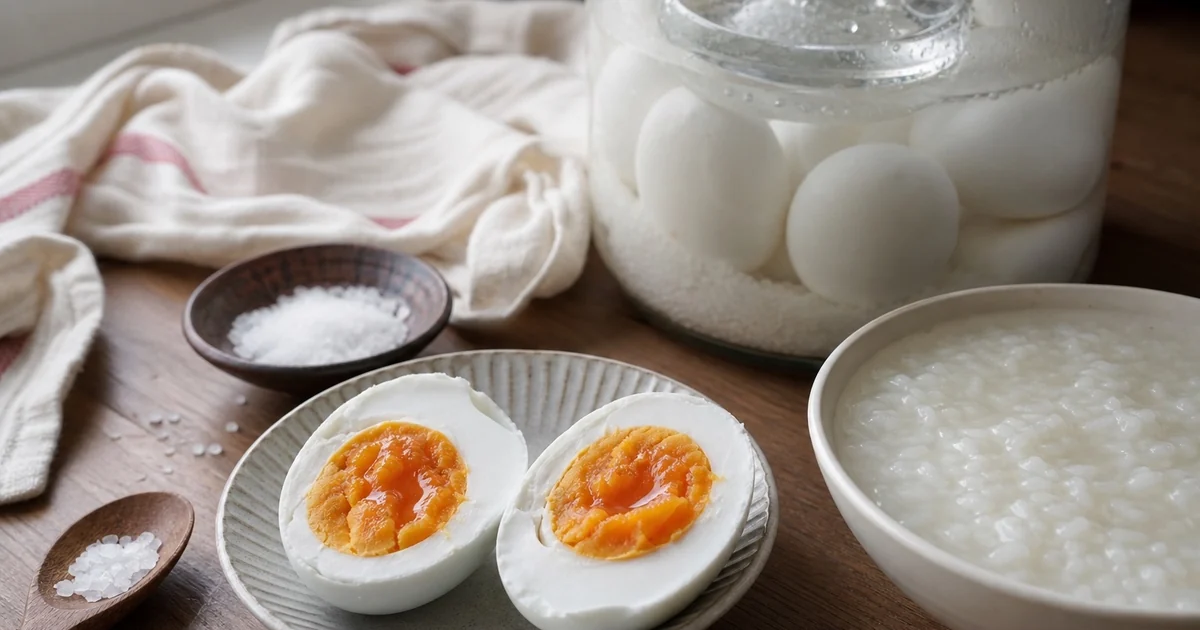
Ingredients
Method
Method
- Choose fresh chicken eggs with complete, uncracked shells. Wash the shells gently and let them dry completely.
- Wash a glass jar or sealable container, rinse with hot water, and let it dry. Avoid leaving raw water inside the jar.
- Bring the water to a boil, add the salt, and stir until fully dissolved. Let the brine cool completely before using it.
- Place the eggs in the container and pour in the cooled brine. The eggs must stay fully submerged. If they float, weigh them down with a clean small plate or a sealed water bag.
- Seal the container and keep it in a cool, shaded place away from direct sunlight for 21–30 days.
- On day 21, take one egg out and steam or boil it fully before tasting. If the white and yolk are not salty enough, continue curing for another 3–7 days.
- When the flavor is right, remove the eggs, wipe them dry, and refrigerate. Always steam or boil salted eggs thoroughly before eating.
Notes
- Do not use cracked eggs. If the brine smells strange, grows mold, turns unusually sticky, or an egg cracks during curing, discard it.
- A water-to-salt ratio between 3:1 and 4:1 works for home use. A stronger brine is more stable; a milder brine should be tested earlier.
- Chicken egg yolks are smaller and usually less oily than duck egg yolks, but they are useful for zongzi, pineapple cakes, mooncakes, and salted-egg stir-fries.
- After curing, refrigerate the raw salted eggs. Once steamed or boiled, keep them sealed in the refrigerator and use within about one week.