
Ingredients
Equipment
Method
Prep the ingredients
- Slice the scallions, mince the garlic and ginger, press the tofu dry and cut it into small cubes, and cut the cucumber into thin strips. Keep everything ready before you start cooking.
Cook the pork
- Heat 1 tablespoon of oil in a wok or frying pan. Add the garlic and ginger and cook for about 30 seconds, then add the ground pork. Stir-fry over medium heat until the pork changes color and releases some fat.
Build the sauce
- Add the diced tofu and cook for 1 minute. Stir in the red miso, mirin, sugar, soy sauce, and doubanjiang. Press the miso against the pan with your spatula so it melts into the pork evenly.
Cook it low and slow
- Turn the heat down and keep stirring for 3 to 4 minutes. The sauce should go from grainy to glossy and thick. This low-heat stage is what gives zhajiangmian its rich, clingy texture.
Loosen and finish the sauce
- Add 50 ml of water and bring the sauce to a gentle simmer. Cook another 2 to 3 minutes until it looks shiny and lightly oily on the surface. Taste and adjust with a little more soy sauce, sugar, or water if needed.
Boil the noodles and serve
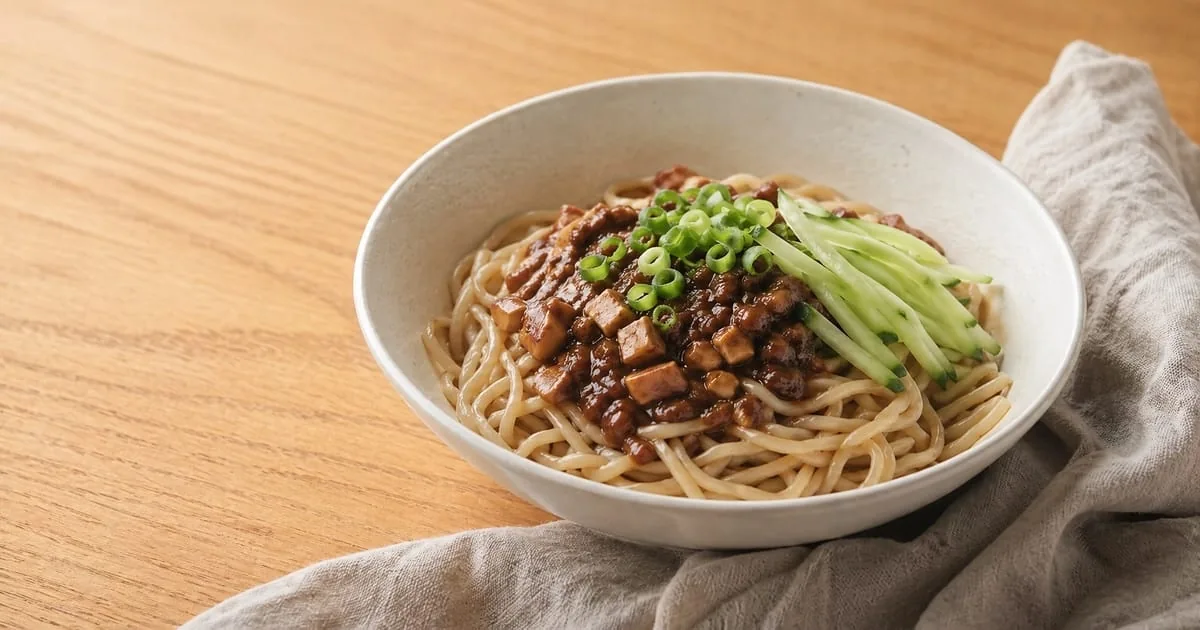
- Boil the noodles until just springy, drain well, and divide them between bowls. Spoon the sauce over the noodles and top with cucumber strips and scallions. Toss before eating so every strand gets coated.
Notes
- Use low heat when the miso-based sauce goes into the pan, or it can scorch before the flavors come together.
- If you have Taiwanese tianmianjiang, use it. If not, red miso plus mirin is the most practical supermarket shortcut in Japan.
- Seed the cucumber before slicing so it stays crisp and does not water down the noodles.
- This sauce should coat the noodles, not pool at the bottom like soup.